
Samsung has reclaimed the position of the world’s top smartphone maker in the second quarter of 2026, driven largely by strong shipments of its Galaxy S26 series. At the same time, the company is confronting a display anomaly affecting some S26 Ultra units, managing expectations around modest upgrades in its next foldables, and preparing for possible price increases tied to industry-wide component shortages.
These developments illustrate how Samsung is balancing short-term operational pressures with longer-term ambitions in flexible-display technology and software differentiation. The interplay between market share gains, hardware refinements, and supply-chain constraints will shape its competitive stance against Apple and emerging Chinese rivals through the remainder of the year.
Reclaiming Global Dominance Amid Supply Constraints
Counterpoint Research data shows Samsung captured 24 percent of global smartphone shipments in Q2 2026, edging ahead of Apple after the latter held the top spot through the first half of the year. The Galaxy S26 Ultra, released in March, emerged as the standout model, helping Samsung reverse Apple’s brief lead that had been built on record iPhone sales earlier in the period. Apple’s own market share rose 3 percent year-over-year to 20 percent, yet legacy iPhone models suffered from softer demand as memory components were prioritized for newer devices.
The shift coincides with a tightening global RAM supply driven by surging demand from AI infrastructure. Counterpoint projects a 14 percent decline in overall smartphone shipments for 2026, with higher component costs likely to pressure manufacturers and consumers alike. Samsung’s ability to maintain volume leadership while Apple absorbs allocation constraints highlights differing supply-chain strategies between the two companies.
Addressing Display Anomalies in Premium Devices
Samsung has acknowledged that certain Galaxy S26 Ultra displays can develop a reddish or pink tint under prolonged exposure to intense lighting at maximum brightness, conditions most commonly encountered in retail demonstration units. The company attributes the color shift to temporary calibration drift rather than hardware failure and states that a software-based color calibration update will restore uniform balance without requiring panel replacement.
Owners reporting the issue on social media note that the discoloration can appear gradually after months of use or be visible on store models. Samsung’s review unit has shown no such change, suggesting the phenomenon remains limited in scope. Because the S26 Ultra is the only current Samsung handset equipped with the Privacy Display feature, some observers initially speculated a link, though the company’s statement makes no reference to that technology.
The episode underscores the sensitivity of modern OLED panels to environmental stressors and the importance of ongoing calibration routines that Samsung has long applied across its display portfolio. A forthcoming software fix will test how effectively the company can address field-reported deviations without physical intervention.
Exploring Next-Generation Form Factors
Behind closed doors at Samsung Display’s headquarters, engineers have demonstrated prototypes that extend beyond current clamshell and book-style foldables. The Flex S concept folds into a Z-shaped configuration, opening to a tablet-sized surface suited for media consumption, while the Out Foldable places screens on the exterior of both panels, reversing the conventional book-style layout.
These experiments complement the recently released Galaxy Z TriFold and point toward a broader exploration of rollable and slideable mechanisms. Development of a slideable device using a rollable OLED panel has reportedly accelerated, potentially reaching the market in 2027 ahead of a second-generation TriFold. Such form factors could address durability concerns associated with repeated hinge cycles while offering larger usable screen areas without increasing overall device footprint.
Iterative Upgrades and Pricing Realities
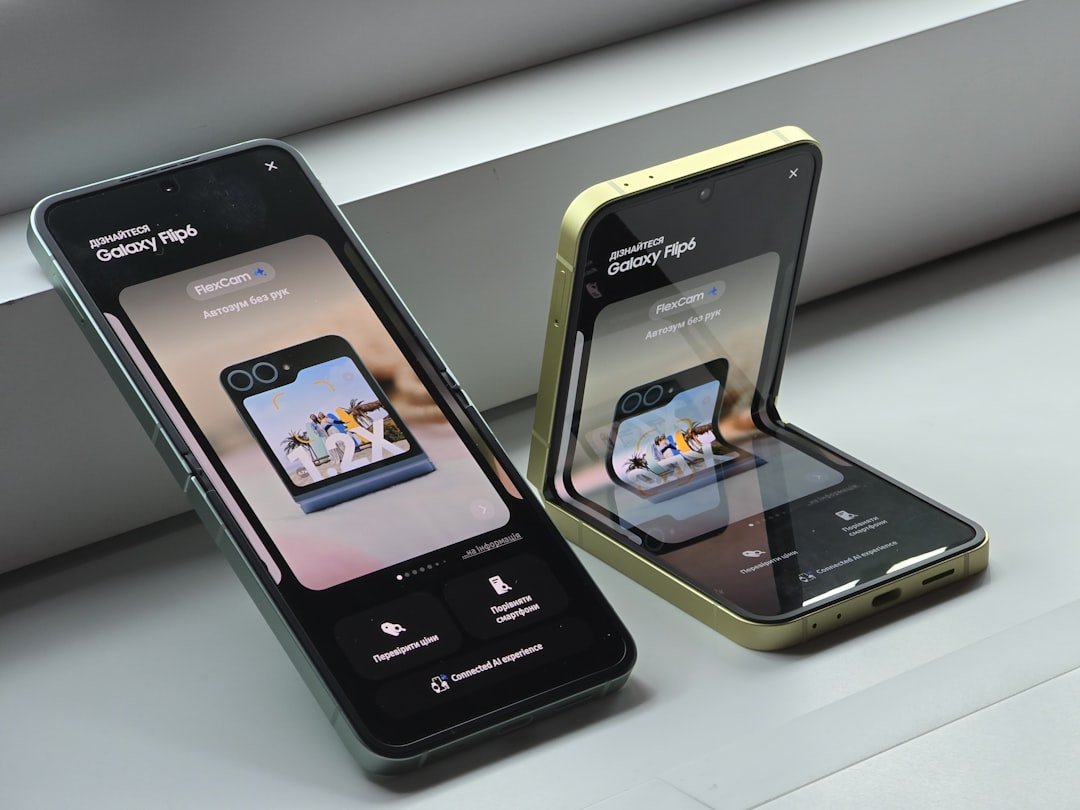
Leaked specifications for the Galaxy Z Flip 8 indicate largely incremental changes over the Flip 7, including an Exynos 2600 processor, 45 W wired charging support, and an 8-gram weight reduction. The device is also expected to be marginally thicker. Similar patterns appear in early reports on the Galaxy Z Fold 8, which Samsung has teased in a cinematic partnership with the upcoming Spider-Man film as featuring a “new shape” when closed.
These modest hardware revisions arrive against a backdrop of anticipated price increases. Reports suggest the base Z Fold 8 may start at $2,199, a $100 increase over its predecessor, while the Flip 8 could rise to $1,199. The same RAM supply constraints affecting Apple are cited as a contributing factor, following Samsung’s earlier decision to raise prices across the Galaxy S26 lineup by roughly $100 per model.
Software Ecosystem Enhancements
Beyond hardware, Samsung continues to differentiate its devices through interface features that improve multitasking on non-foldable phones. The Edge Panel, accessible via a swipe from the screen edge, functions as a customizable taskbar that surfaces frequently used apps, recent items, and AI tools. Users can also drag applications into split-screen or floating-window modes directly from the panel.
The feature is available across Samsung’s Galaxy lineup and select Motorola devices but remains absent from Google’s Pixel series. Its utility becomes especially apparent on larger displays, where it reduces the friction of switching contexts or invoking split-screen functionality. As Samsung prepares to unveil new watches and foldables at its July 22 Unpacked event, refinements to One UI are expected to further integrate these productivity tools with the company’s expanding hardware portfolio.
Samsung’s current trajectory reflects a company simultaneously defending its renewed market leadership, remediating isolated hardware issues through software, and advancing ambitious display concepts whose commercial timelines remain fluid. The degree to which supply constraints translate into sustained price pressure, and whether novel form factors can move beyond prototypes into meaningful volume, will determine whether the present rebound extends into a durable competitive advantage.