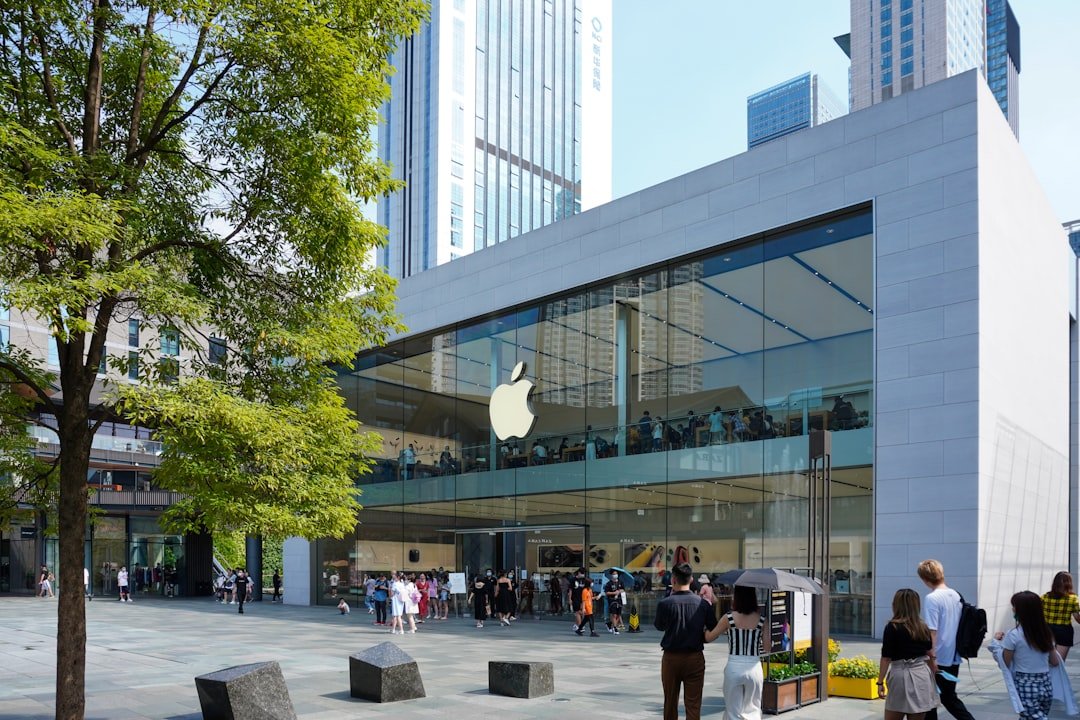

Apple’s regulatory clearance to deploy its Apple Intelligence features in China through a partnership with Alibaba has triggered immediate market gains, with the company’s shares rising nearly 4 percent and Alibaba’s U.S.-listed stock climbing 4 percent. The approval resolves months of uncertainty over how the iPhone maker would comply with Beijing’s data and AI rules in its largest overseas market. By integrating Alibaba’s Qwen model, Apple gains a pathway to generative capabilities such as text and image generation across iOS, iPadOS, macOS, and visionOS for Chinese users.
This development arrives against a backdrop of intensifying U.S.-China technological competition and Apple’s need to refresh its hardware lineup in a market where domestic rivals like Huawei already market AI-enabled devices aggressively. The clearance also coincides with reports that Apple is exploring acquisitions of chip startups to strengthen its server-side AI infrastructure.
Regulatory Clearance Accelerates Localized AI Rollout
The Cyberspace Administration of China added Apple Intelligence to its list of approved smartphone AI services, placing the company alongside domestic providers including Huawei. Alibaba confirmed that its Qwen model will power core experiences, enabling users to access text and image understanding without switching between separate applications. Technical feasibility improved after PrismML demonstrated compression techniques that reduced the 27-billion-parameter Qwen model from roughly 54 gigabytes to under 4 gigabytes, allowing on-device execution on iPhone 15 and newer hardware.
The move directly addresses sales risks. Without native Apple Intelligence support, Apple faced the prospect of slower iPhone upgrade cycles in China. The partnership therefore functions as both a compliance solution and a competitive counter to local AI offerings. At the same time, the arrangement places Apple at the center of geopolitical friction, as U.S. policymakers scrutinize the use of Chinese AI models while Beijing enforces strict localization requirements.
Content Discovery Friction Persists Across Streaming Apps
While Apple advances its AI capabilities, everyday user experiences on the Apple TV platform reveal ongoing friction. The Disney+ application now automatically plays video previews whenever a user pauses on a title thumbnail, a change introduced after a recent update. Similar autoplay behavior appears across nearly every major streaming service, reflecting an industry-wide emphasis on capturing attention in a crowded marketplace.
Apple provides per-app settings to disable these previews, yet each service buries the toggle in a different menu. The absence of a standardized tvOS control forces users to hunt through individual applications whenever they prefer silent browsing. This design choice underscores the tension between platform owner and third-party developers, where Apple has so far declined to mandate default-off autoplay or a common settings location.
MLS Return Highlights Apple TV’s Content Strategy
Major League Soccer resumed regular-season play on Apple TV on July 16, marking the first matches following the FIFA World Cup break. Every game remains available without blackouts to subscribers in more than 100 countries, supplemented by analysis, exclusive programming, and postseason events including the Leagues Cup and MLS Cup Playoffs. A record 45 MLS players participated in the 2026 World Cup, lending additional narrative momentum to the league’s return.
The arrangement demonstrates Apple’s willingness to invest in live sports as a retention tool, even as hardware pricing draws criticism. The platform’s global reach and lack of regional restrictions differentiate it from traditional broadcast models and reinforce the company’s position as a premium destination for niche and international audiences.
Hardware Pricing Fuels Questions About Apple TV’s Future
Recent price increases on the Apple TV 4K have reignited debate over the device’s market position. The base Wi-Fi model rose from $129 to $199, while the Ethernet variant increased from $169 to $249. These adjustments apply to hardware that has remained unchanged since 2022. Critics argue the new pricing distances the product from mainstream streaming devices that sell for far less, yet the premium positioning aligns with Apple’s broader refusal to compete on cost or include advertising on the home screen.
The higher prices coincide with sustained emphasis on a curated, ad-free experience that prioritizes ecosystem integration over volume sales. Whether the increases reflect confidence in a loyal installed base or signal limited future hardware investment remains an open question for observers tracking the platform’s trajectory.
Educational Promotions Tighten Amid Price Increases
Apple’s 2026 Back to School promotion, running only from July 16 to August 27, offers gift cards of up to $150 with qualifying MacBook Pro purchases and $100 with MacBook Air, iPad Air, or iPad Pro models. The program excludes all desktop Macs and runs for roughly six weeks, a shorter window than the three-month periods offered in prior years. Gift card values have also declined relative to earlier promotions that included accessory bundles worth up to $199.
The shortened duration and narrower product scope come at a moment when Apple has raised prices on several Mac and iPad lines. The resulting offer provides less effective offset against those increases, particularly for buyers seeking desktop systems or longer decision windows before the academic year begins.
These concurrent developments illustrate Apple’s efforts to balance regulatory navigation in critical markets, content and hardware monetization on its television platform, and consumer incentives amid rising prices. The China AI partnership may ease immediate hardware sales pressure, yet the same geopolitical dynamics that enabled the deal continue to shape supply-chain and acquisition strategies. Meanwhile, user-experience friction on Apple TV and tighter promotional terms suggest the company is prioritizing margin and control over broad accessibility. How these choices affect long-term engagement across both consumer and enterprise segments will become clearer as the fall hardware cycle unfolds.