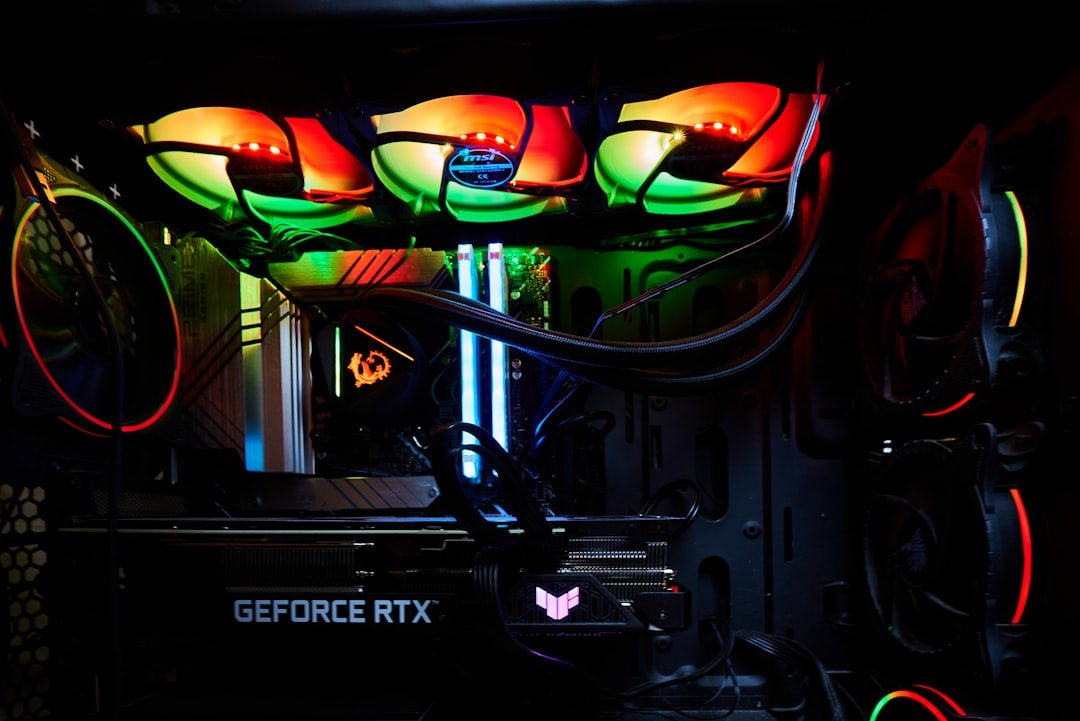

NVIDIA’s latest moves reveal a company simultaneously expanding consumer access to high-performance gaming while embedding its technology deeper into enterprise AI infrastructure. The pairing of Steam Summer Sale promotions with GeForce NOW discounts underscores how cloud streaming is reshaping game distribution, even as new EC2 G7 instances on AWS bring Blackwell-class GPUs to production workloads. At the same time, the stock’s pullback to the $200 level has drawn attention to a forward P/E of 23 despite 85 percent year-over-year revenue growth in the most recent quarter.
These developments matter because they illustrate NVIDIA’s ability to monetize the same underlying GPU architecture across very different markets. Consumer users gain flexibility without hardware upgrades, while enterprises receive low-latency inference and vector-search acceleration at scale. The tension between robust fundamentals and tempered share prices raises questions about whether the market is correctly pricing the durability of AI demand.
Steam Sale and GeForce NOW Discounts Align Consumer and Cloud Strategies
The Steam Summer Sale coincides with targeted discounts on GeForce NOW memberships, offering $70 off a 12-month Ultimate tier or $35 off Performance. Members who purchase discounted Steam titles can stream them immediately from RTX 4080- and 5080-class servers at up to 4K resolution and 120 frames per second, complete with DLSS, ray tracing, and Reflex technologies. This removes the traditional friction of downloads, storage management, and local hardware requirements.
The approach extends NVIDIA’s reach into living-room and mobile environments without requiring users to buy new devices. New titles such as Dark Scrolls from Devolver Digital join the service this week, demonstrating continued content momentum. By handling installation and updates in the cloud, GeForce NOW converts one-time game purchases into recurring engagement opportunities while preserving the economics of the Steam ecosystem.
AWS Collaboration Scales Blackwell GPUs for Production AI
On the enterprise side, NVIDIA and AWS have introduced EC2 G7 instances powered by the RTX PRO 4500 Blackwell Server Edition GPU. These instances deliver up to 4.6 times the AI inference performance of prior G6 instances and support configurations ranging from one to eight GPUs with 256 GB of aggregate GPU memory and 700 Gbps EFA networking. The platform also incorporates the cuVS library, making GPU-accelerated vector indexing the default within Amazon OpenSearch Serverless.
This integration addresses the core constraints of production AI: latency, cost per query, and operational simplicity. Data teams can run Apache Spark workloads with NVIDIA cuDF on Amazon EMR, while graphics and spatial-computing teams share the same instance family. AWS’s achievement of NVIDIA Exemplar Cloud status for GB300 systems further signals that hyperscalers are standardizing on NVIDIA’s full-stack optimizations rather than building custom alternatives.
Stock Valuation Reflects Growth Yet Tests Investor Patience
NVIDIA’s most recent quarter produced $81.6 billion in revenue, with the Data Center segment contributing $75.2 billion, up 92 percent year over year. Networking alone grew 199 percent. Management guided the subsequent quarter to roughly $91 billion, excluding any China Data Center compute, while authorizing an additional $80 billion in share repurchases and raising the dividend to $0.25 per share.
Despite these figures, shares have traded near $200 after touching a session low of $189 amid broader semiconductor volatility. The forward price-to-earnings ratio of 23 sits below other Mag-7 AI names even as revenue growth has accelerated across four consecutive quarters. Analysts maintain a $299 consensus target and 95 percent bullish rating, suggesting the market may be discounting execution risks that have not yet materialized in the income statement.
Memory Supply Dynamics Create Short-Term Noise
A report that SK Hynix is reallocating some high-bandwidth memory capacity toward conventional DRAM triggered a sector-wide selloff, with NVIDIA shares declining more than 3 percent intraday. The move reflects margin optimization rather than demand weakness; operating margins on standard DRAM currently exceed those of HBM by more than 15 percentage points. Memory suppliers are managing tight markets, evidenced by Samsung’s reported 146 percent DRAM ASP increase in the first quarter.
For NVIDIA, the episode highlights exposure to the memory supply chain even as the company qualifies multiple HBM4 vendors ahead of the Vera Rubin platform. The $119 billion in supply commitments cited by skeptics could become an overhang only if hyperscaler capital expenditures decelerate—an outcome not yet visible in order books or guidance.
Hedge-Fund Positioning and Competitive Landscape
Several large institutions continue to treat NVIDIA as a core holding, citing its expanding software moat and multi-year visibility into AI factory buildouts. Recent South Korean partnerships with SK Hynix, SK Telecom, and Naver secure memory and cloud capacity for regional AI workloads. At the same time, competitors in memory and CPU segments have posted sharper year-to-date gains, reflecting investor rotation toward perceived bottlenecks in inference and data movement.
The divergence underscores that NVIDIA’s valuation compression is partly narrative-driven. While the company’s GPUs remain central to training and high-performance inference, adjacent layers of the stack—memory, networking silicon, and software frameworks—are attracting incremental capital. This rotation may prove temporary if Blackwell ramp timelines and Vera Rubin early production remain on schedule.
NVIDIA’s simultaneous advances in consumer streaming economics and enterprise infrastructure capacity suggest the company is constructing durable advantages that extend beyond any single product cycle. The stock’s current multiple embeds caution about supply commitments and macro sensitivity, yet the underlying demand signals—accelerated revenue growth, expanding buybacks, and hyperscaler standardization—point to a longer runway than near-term price action implies. How the market reconciles these threads will shape capital allocation across the entire AI ecosystem in the quarters ahead.