
Banks Raise Financing Costs on SK Hynix and Samsung Swaps After Triple-Digit Gains
Global banks have begun restricting leveraged positions in SK Hynix and Samsung Electronics, responding to share-price surges that pushed Korea’s Kospi Index up roughly 100 percent year-to-date. SK Hynix has more than tripled while Samsung Electronics has risen more than 175 percent, moves that reflect intense investor enthusiasm for memory and foundry exposure yet also raise concerns about valuation sustainability.
Citigroup, JPMorgan Chase, and Goldman Sachs have lifted swap financing rates for the two Korean names to between 300 basis points and 11 percent over SOFR, while also capping trade sizes and tightening counterparty eligibility. Morgan Stanley has stopped accepting new swap orders in the stocks altogether. Similar measures have been applied to Taiwan Semiconductor Manufacturing Co. The adjustments began before this week’s broader tech selloff and have already prompted some hedge funds to reduce exposure.
These financing changes matter because swaps remain the primary vehicle for foreign funds to gain leveraged exposure in South Korea, where direct exchange access is limited. Higher costs compress returns precisely when momentum appears to be fading, creating a feedback loop that could accelerate any near-term price correction in memory and logic names.
Samsung’s July 22 Unpacked Event Tests a Two-Model Foldable Strategy
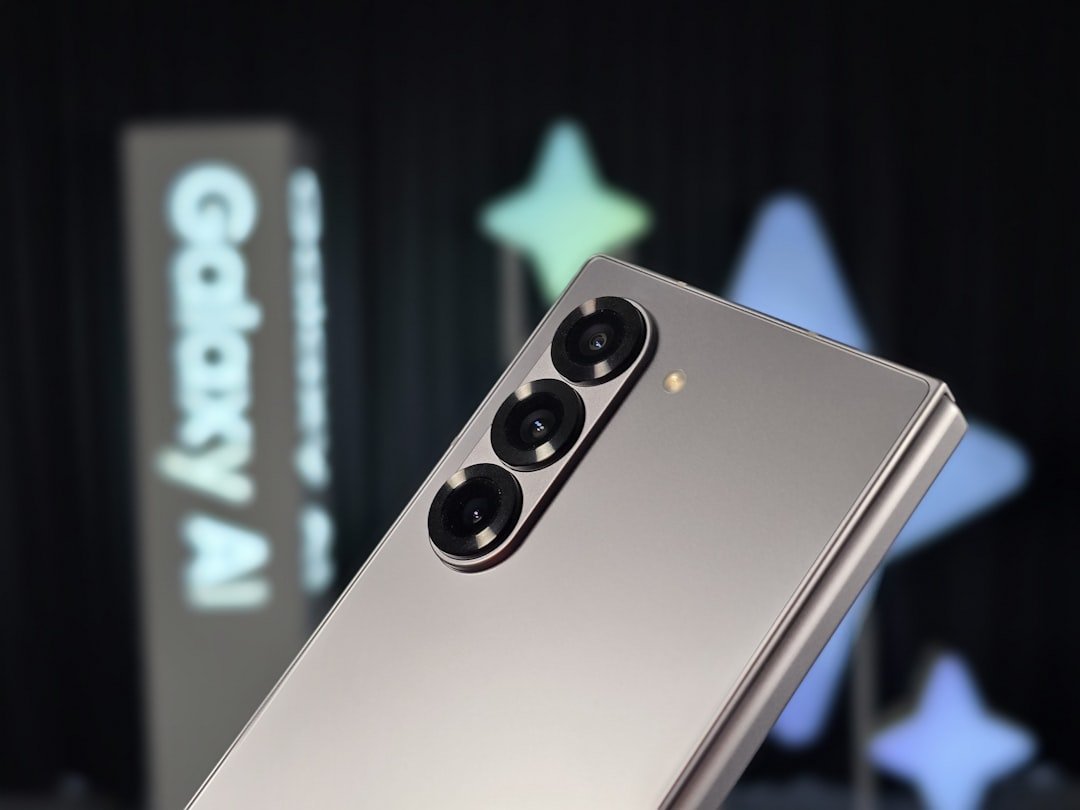
Samsung is preparing to launch the Galaxy Z Fold 8 family on July 22 in London with a structural departure from prior generations. Alongside the conventional tall-aspect-ratio successor to the Z Fold 7, a second “Wide” variant will feature a 4:3 inner display aimed at productivity users. The wider model is expected to weigh around 200 grams, carry only two rear cameras, and adopt a more passport-like form factor.
This bifurcation represents Samsung’s first attempt to serve distinct user segments within the book-style foldable category. The taller Ultra model retains flagship camera and battery ambitions, while the Wide variant prioritizes media consumption and multitasking on a squarer canvas. Leaks indicate the naming convention may shift, with the wider device potentially taking the base Z Fold 8 designation and the taller flagship becoming the Z Fold 8 Ultra.
The dual-launch approach carries execution risk. Supply-chain complexity rises when two mechanically distinct devices must be produced at scale, and pricing will need to differentiate clearly to avoid cannibalization. Yet the strategy also positions Samsung to defend share against emerging competitors offering wider aspect ratios, such as Huawei’s Pura X Max.
Discounted Flagship Alternatives Highlight Transition-Year Dynamics
While attention focuses on next-generation foldables, Samsung is already discounting the Galaxy S25 FE by $201 on Woot, bringing the 128 GB model to roughly two-thirds of its original price. The device carries a 6.7-inch 120 Hz AMOLED panel, Exynos 2400 silicon, a 4,900 mAh battery with 45 W charging, and a triple-camera array led by a 50 MP sensor. Seven years of OS updates remain intact.
The aggressive promotion reflects both inventory management ahead of the S26 cycle and recognition that the FE line must compete more directly on value. Similar discounting has appeared on the Samsung 990 Pro 1 TB NVMe SSD, now available for $249.99 after a 22 percent reduction. These moves illustrate how Samsung uses price elasticity in mature product lines to maintain volume while capital is redirected toward higher-margin innovations such as advanced foldables and next-node process technology.
Performance Headroom and Thermal Design in the S26 Ultra Generation
Early details on the Galaxy S26 Ultra point to meaningful gains in sustained performance. The Snapdragon 8 Elite Gen 5 for Galaxy is projected to deliver a 19 percent CPU uplift, 24 percent GPU improvement, and 39 percent faster NPU relative to the prior generation. A significantly larger vapor chamber will accompany the new silicon, addressing thermal throttling that has historically limited extended gaming and AI workloads.
Complementary upgrades include up to 16 GB of RAM and UFS 4.0 storage. These changes matter less for synthetic benchmarks than for real-world consistency: on-device generative AI features, multi-app workflows, and high-frame-rate gaming can maintain peak throughput longer without aggressive frequency scaling. The efficiency gains also support Samsung’s broader goal of extending battery life in thinner chassis, a requirement if the company intends to keep pace with both Chinese and Western competitors in the ultra-premium segment.
Capital-Market Signals and Hardware Ambition Create Crosscurrents
The simultaneous tightening of swap financing and the unveiling of an expanded foldable portfolio reveal contrasting pressures on Samsung’s ecosystem. Equity markets are signaling caution on the memory and foundry cycle that has driven recent share-price gains, while product teams are accelerating differentiation through form-factor experimentation. For institutional investors, the higher cost of leverage may reduce speculative positioning in Korean chip names even as Samsung’s device roadmap attempts to capture new usage patterns.
Over the next several quarters, the interaction between these forces will determine whether Samsung can translate hardware innovation into durable revenue growth or whether valuation compression in its semiconductor exposure will offset device-segment gains. The July 22 event will provide the first concrete pricing and availability data to assess whether the dual-foldable strategy can justify the added complexity.
The coming months will also test whether banks’ pullback from leveraged Korean semiconductor bets proves temporary or becomes a structural shift in how global funds access the region’s technology leaders.