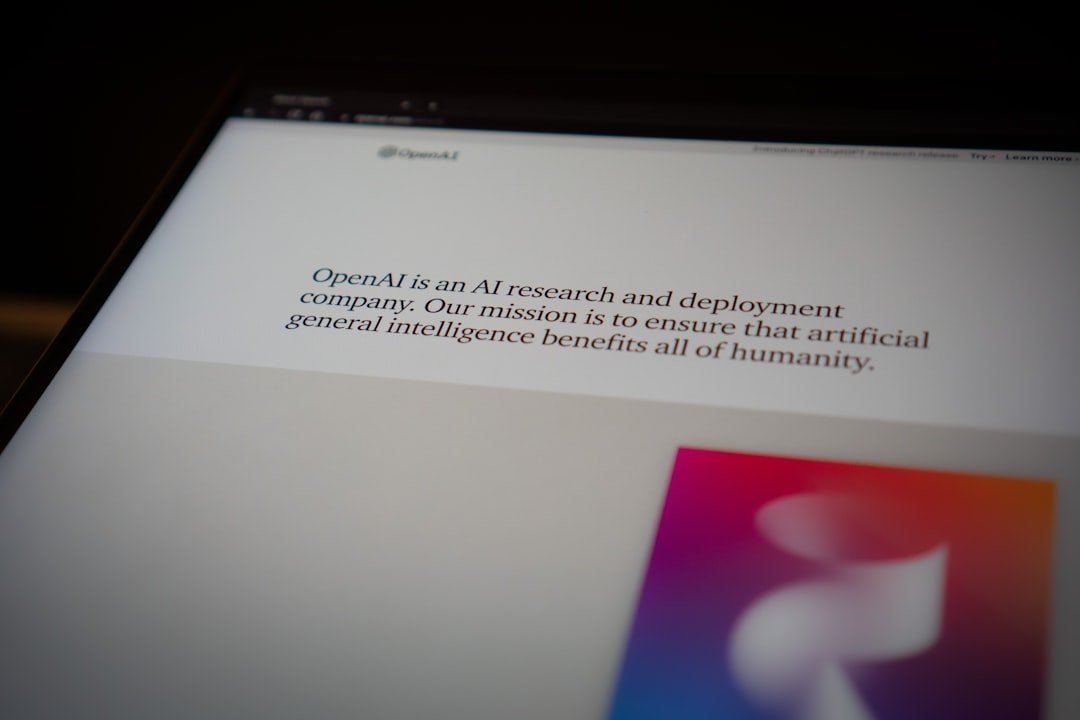

OpenAI has taken the formal step of submitting a confidential S-1 registration statement to the Securities and Exchange Commission, positioning the company to access public capital markets at a valuation of $852 billion. The move arrives amid an unprecedented wave of AI-related listings, following rival Anthropic’s filing by exactly one week and preceding SpaceX’s planned debut at a $1.75 trillion valuation.
This sequence of events underscores how frontier AI laboratories are shifting from venture-backed experimentation to the structural demands of scaled infrastructure and sustained revenue growth. The filings expose both the immense capital requirements of training and serving frontier models and the strategic trade-offs companies face when choosing between private flexibility and public-market scrutiny.
Timing Calculations Behind the Confidential Filing
OpenAI’s decision to file without committing to a launch date reflects careful calibration of regulatory, operational, and competitive factors. The company stated it expects the filing to leak and therefore chose transparency, while noting that “there are things we want to do that are likely easier as a private company.” Confidential submissions typically precede public offerings by six to nine months, giving OpenAI latitude to complete internal milestones before facing quarterly reporting obligations.
The filing was prepared with Goldman Sachs and Morgan Stanley, the same banks leading SpaceX’s offering. OpenAI also intends to conduct a tender offer allowing employees to sell shares at the latest $852 billion post-money valuation, addressing liquidity demands without an immediate public debut. These mechanics illustrate how the company is engineering optionality: it can accelerate an IPO if market conditions prove favorable or remain private while it executes on product and infrastructure initiatives that would face greater disclosure constraints once public.
The Three-Way Race Reshaping Public Markets
The clustering of OpenAI, Anthropic, and SpaceX offerings marks the largest concentration of high-valuation technology listings since the dot-com era. Anthropic filed at a $965 billion valuation after raising capital in May, while SpaceX’s $1.75 trillion target reflects investor appetite for companies tied to both physical infrastructure and artificial intelligence through its xAI affiliate. Together the three entities represent more than $3.5 trillion in combined valuation, dwarfing the scale of earlier landmark IPOs.
This concentration carries implications for market absorption and valuation discipline. Each company carries substantial ongoing capital needs—OpenAI alone raised $122 billion in March, much of it earmarked for data-center construction and cloud capacity. Public investors will now evaluate whether these expenditures translate into durable margins or whether the pace of frontier-model spending outstrips revenue growth. The simultaneous debuts also compress the window during which any single issuer can command attention, potentially increasing pressure on execution metrics once trading begins.
Reorienting ChatGPT Toward Autonomous Agents
Parallel to the IPO preparations, OpenAI is executing its most significant product reorganization since ChatGPT’s 2022 launch. The company is converting the chatbot into a “superapp” platform that embeds third-party services and autonomous agent capabilities. Planned integrations include Canva for design workflows and Booking.com for travel orchestration, while the Codex coding product has already expanded from developer-centric use to broader knowledge-work applications.
Weekly active Codex users have grown sixfold to more than five million since the desktop app launch in February. Business customers now generate roughly 40 percent of revenue, a share projected to reach 50 percent by year-end. The shift prioritizes multi-step task execution—calendar management, data analysis, sales outreach—over simple query response. OpenAI has deprioritized certain consumer experiments, including a recently launched video-generation tool, to concentrate engineering resources on agent infrastructure. This reallocation signals that the company views agentic workflows as the primary vector for enterprise adoption and defensible revenue ahead of a public listing.
Enterprise Tools and the Push for White-Collar Adoption
OpenAI has released six specialized plug-ins for Codex targeting data analytics, creative production, sales, product design, equity investing, and investment banking. Each bundle combines domain-specific instructions, integrations, and context to approximate specialized roles. A new Sites feature allows Codex to publish work products as hosted interactive websites, supported by partnerships with Wix, Figma, and Replit. An Annotations capability further enables granular commands within documents.
These releases follow the February launch of Anthropic’s enterprise agents program and reflect OpenAI’s accelerated effort to capture knowledge-worker budgets. Internal data shows knowledge workers now comprise 20 percent of Codex users and are growing more than three times faster than the developer segment. The timing of these tools, coming weeks after OpenAI established a dedicated Deployment Company joint venture with more than $4 billion in funding, indicates a deliberate pivot toward recurring enterprise contracts that can underwrite the capital intensity of model development.
Security Controls and Cost Discipline Emerge as Differentiators
As usage scales, OpenAI has introduced Lockdown Mode to mitigate prompt-injection attacks that could exfiltrate sensitive data through web browsing or retrieved content. The feature disables live browsing, image retrieval, deep research, and agent mode for accounts handling regulated information. Although the mode does not eliminate all risks, it provides a configurable boundary for organizations subject to data-protection requirements.
Simultaneously, enterprises are confronting token costs that have exceeded internal budgets. At approximately $200 per employee per week, annual spend can reach $10,000 per person; one large technology firm reported a $900 million annual AI bill. Model-routing techniques that direct routine queries to lighter models while reserving frontier models for complex tasks are delivering five- to tenfold efficiency gains. This emerging discipline directly pressures providers whose revenue models still rely heavily on high-volume frontier-model usage, forcing OpenAI and peers to demonstrate clear value differentiation beyond raw capability.
The convergence of IPO mechanics, product rearchitecture, and enterprise cost pressures suggests that 2026 will test whether frontier AI companies can convert technical leadership into predictable, high-margin businesses under public-market oversight. How these firms balance continued infrastructure investment against investor demands for profitability will shape capital allocation across the sector for years to come.