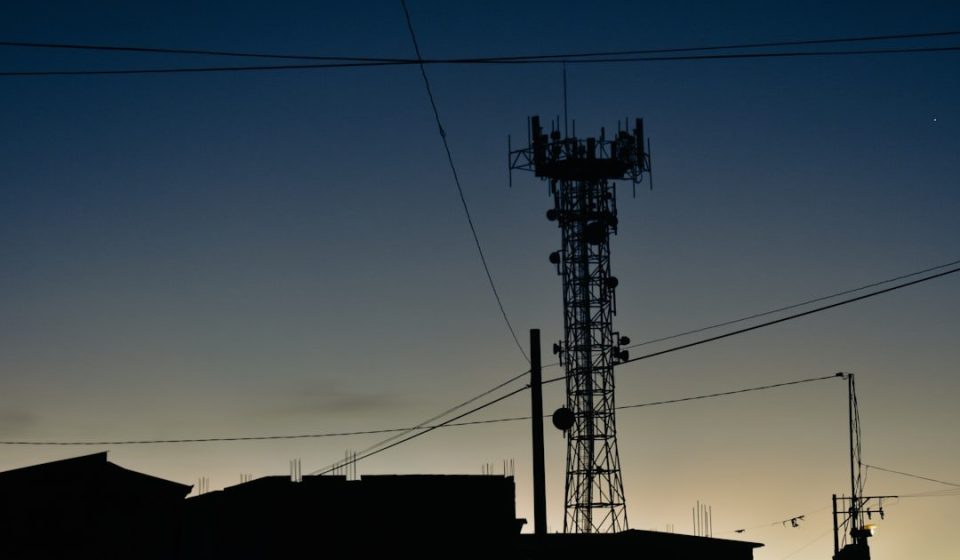

Huawei’s 8T8R radio solution, now running live on Morocco’s busiest rail and highway corridors, delivers a 13 dB coverage boost and an 83 percent increase in average downlink throughput compared with legacy 2T2R sites. The deployment, executed jointly by inwi and Huawei, replaces the need for new physical towers by extending each site’s reach by nearly one kilometer while tripling the number of active users per cell. These gains matter because transportation corridors have long exposed the limits of conventional macro networks: high velocity, rapidly changing interference, and large inter-site distances create persistent coverage holes that frustrate both consumers and regulators pushing digital-inclusion targets.
The same week, Huawei disclosed an August 5 launch slate that includes the nova 16 SE, an updated MateBook Fold, a refreshed MatePad Pro, and the MateBook Pro S. The clustering of announcements underscores a deliberate strategy: leverage radio-access leadership to underwrite an expanding consumer-hardware portfolio that must operate reliably on the very networks Huawei is upgrading.
Targeted Beamforming Reshapes Corridor Economics
inwi’s deployment combines 1.8 GHz and 2.1 GHz spectrum inside a dual-band 8T8R radio paired with high-gain Hertz antennas. Huawei’s HyperBeamforming algorithm narrows the beam footprint in real time, cutting inter-cell interference while expanding single-site coverage by 30 percent. Because the radios reuse existing towers, inwi avoids the capital and permitting costs of additional sites—an important consideration in Morocco’s mountainous rail corridors where new construction is both expensive and slow.
The measured outcomes are concrete. Downlink user-perceived throughput rose 83 percent, and the number of simultaneous active users per cell increased by a factor of 3.2. These figures translate directly into smoother video calls for passengers and more reliable telemetry for rolling stock. For operators facing spectrum constraints, the 8T8R approach demonstrates that beamforming precision can substitute for additional spectrum or denser site grids, a lesson likely to be studied by carriers in similarly linear geographies.
Battery Scale Becomes a Differentiator in the Nova Family
Huawei’s upcoming nova 16 SE carries an 8,500 mAh cell and 66 W wired charging, numbers that dwarf typical mid-range handsets. The device will ship with Kirin 8020 silicon, a 6.84-inch AMOLED panel rated to 8,000 nits peak brightness, and a 50 MP main camera using Red Maple imaging. Pre-orders are already open in China, signaling that Huawei intends to occupy the value segment with endurance rather than headline camera counts.
The design echoes recent Honor devices, yet Huawei has differentiated the nova 16 SE through gradient finishes and repositioned LED flash placement visible in leaked images. The emphasis on battery capacity addresses a practical pain point for travelers who rely on corridor networks for navigation and streaming; a handset that lasts an entire high-speed journey without recharging reduces friction for exactly the users inwi is trying to serve.
Ultraportable Laptops Enter the Professional Toolkit
Alongside the nova 16 SE, Huawei will unveil the MateBook Pro S, a laptop that weighs 798 grams and incorporates a three-camera array. The weight target places the machine in the same class as premium ultrabooks while the camera configuration suggests support for multi-angle video calls or document scanning—features that matter for mobile professionals who move between rail carriages and offices. The device joins an updated MateBook Fold Ultimate Design with an 18-inch foldable display offered in three colorways, indicating Huawei’s willingness to experiment with form factors that traditional PC vendors have largely avoided.
Flagship Display Metrics Signal Sustained R&D Investment
Independent lab tests of the Pura 90s Pro Max reveal a 6.9-inch LTPO OLED panel capable of 1,192 nits at 75 percent white fill and 1,777 nits at 10 percent fill. Minimum brightness reaches 1 nit, and the panel supports dynamic refresh from 1 Hz to 120 Hz with high-frequency PWM dimming. These characteristics matter for users who consume media on trains where ambient light fluctuates and battery life remains paramount. The measured performance places the Pura 90s Pro Max competitively against recent flagships from other vendors, even as Huawei continues to navigate component-access constraints.
Graphics Software Strategy Remains Cautious
Huawei is evaluating whether to upstream a partial Mesa Vulkan driver. The proposal, described as “half-hearted” by observers, would expose only a subset of the company’s GPU capabilities to the open-source stack. Full upstreaming would require more extensive code sharing and ongoing maintenance commitments; the current stance suggests Huawei is testing community reaction before committing resources that could accelerate Linux-based development on its silicon.
Coherent Ecosystem Play
The Morocco corridor deployment, the nova 16 SE’s endurance focus, the MateBook Pro S’s portability, and the Pura 90s Pro Max’s display metrics collectively illustrate Huawei’s attempt to control performance variables at every layer—from radio beams to device batteries to software interfaces. Each advance reduces friction for users who expect consistent experience whether stationary or moving at high speed. The open-source driver discussion hints at a parallel effort to lower barriers for developers who might otherwise bypass Huawei silicon.
Whether these moves can expand Huawei’s addressable market outside China will depend on regulatory reception and the pace at which competing vendors match the same combination of radio efficiency and device endurance. For now, the operator-grade results in Morocco and the concrete specifications slated for August 5 show a company still investing heavily in measurable network and hardware improvements rather than relying solely on marketing narratives.