
Huawei’s Chip Empire Faces Internal Fractures as AI Demand Reshapes Supplier Relations
The eviction of Huawei-linked engineers from a leading Chinese memory maker’s research facility reveals a sharp reversal in bargaining power inside China’s semiconductor ecosystem. CXMT, once a price-taker in the DRAM market, has begun imposing higher prices on Huawei itself, triggering the abrupt removal of engineers from a key cleanroom in June. This episode underscores how surging demand for high-bandwidth memory in AI data centers has altered competitive dynamics even among firms ostensibly united against U.S. export controls.
The incident reflects broader tensions. While Washington’s restrictions were intended to isolate Huawei, they have accelerated domestic consolidation and pricing power for upstream suppliers. At the same time, Huawei continues to expand its own silicon capabilities, launch advanced networks, and promote new architectural approaches to circumvent technology bottlenecks. These parallel developments—supplier assertiveness and Huawei’s technical push—now define the contours of China’s AI hardware landscape.
Memory Makers Assert Leverage Against Former Clients
CXMT’s decision to raise DRAM prices and eject Huawei-affiliated engineers from its R&D site marks a decisive shift for a company previously described as “humble.” The move followed Huawei’s unsuccessful requests for price relief amid tightening supply. SiCarrier, a Huawei equipment partner involved in EUV development, attributed the confrontation to CXMT’s newfound willingness to demand margins that its Chinese customers had not anticipated.
The episode carries implications beyond bilateral friction. Memory chips, long a low-margin commodity, have gained strategic value as AI training clusters consume the majority of available DRAM. Manufacturers such as CXMT and YMTC now operate from a position of relative strength, reducing their dependence on any single downstream buyer. This rebalancing complicates assumptions that U.S. sanctions would automatically foster seamless cooperation among Chinese technology firms.
Revenue Growth Defies Export-Control Intent
Despite successive rounds of U.S. restrictions dating to 2019, Huawei is projected to reach approximately $12 billion in chip revenue for 2026, up from $7.5 billion the prior year. State procurement policies that direct government agencies toward domestic suppliers have provided a reliable demand base, offsetting lost access to advanced process technology from leading foundries.
Analysts note that this trajectory challenges the original premise of the controls. While Huawei remains cut off from the most advanced nodes available to global competitors, the company has sustained growth through a combination of domestic substitution, architectural workarounds, and continued investment in its HiSilicon design arm. The result is a more vertically integrated Huawei than existed before the sanctions intensified.
Uplink Networks and the Mobile AI Transition
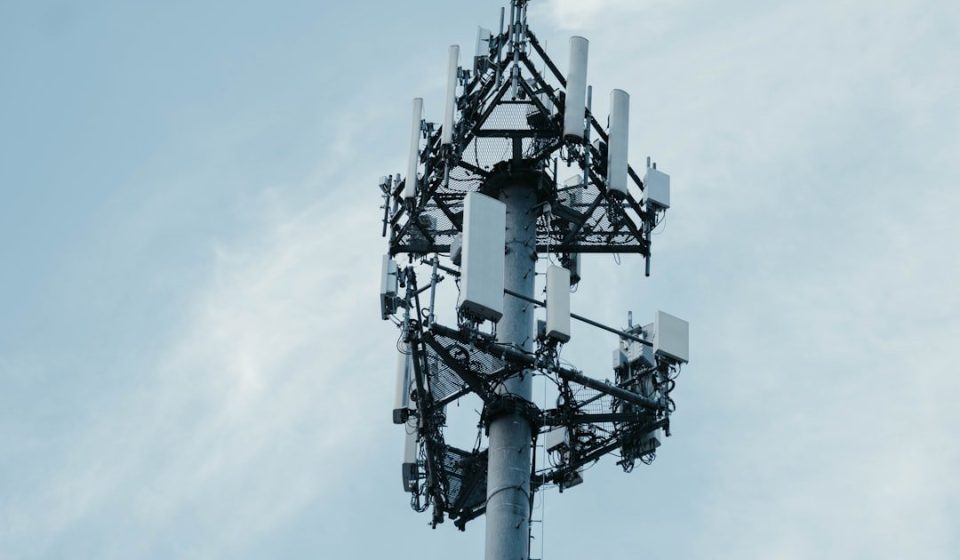
Huawei and China Unicom Beijing have deployed what they describe as the world’s largest commercial 5G-Advanced 100 MHz GigaUplink network, covering key areas of Beijing with more than 10,000 base stations. Peak uplink speeds reached 1 Gbps during drive tests, with average throughput of 397 Mbps and an effective 100 MHz uplink ratio of 83 percent.
The deployment responds to shifting traffic patterns created by on-device AI. Applications such as real-time inference on AI glasses and smartphones require substantial data movement from edge devices to cloud processing, inverting the traditional emphasis on downlink optimization. Huawei executives argue that this trend will drive sustained operator investment in uplink infrastructure, positioning the vendor’s 5G-Advanced portfolio as foundational rather than incremental.
Architectural Responses to Moore’s Law Constraints
Huawei’s semiconductor leadership has endorsed the “Tau Scaling Law” as the company’s primary route to continued performance gains under sanctions. The approach emphasizes advanced packaging techniques, including logic folding and multi-dimensional coordination, to extract additional capability without relying solely on transistor shrinkage. Company founder Ren Zhengfei described the framework as essential for survival, noting that Huawei lacks the alternative technology paths available to less restricted competitors.
Parallel efforts include the development of “LogicFolding” concepts that stack logic elements to improve density and interconnect efficiency. While these techniques echo earlier industry explorations by IBM and imec, Huawei’s scale and state-backed resources may accelerate practical implementation. The strategy also highlights the growing importance of domestic electronic design automation tools capable of handling the thermal and layout complexities of folded architectures.
GPU Performance Trade-offs in Domestic AI Training
DeepSeek CEO Liang Wenfeng has stated that Huawei’s Atlas 950 SuperPoD can fully substitute for NVIDIA GB200 and GB300 racks in both performance and supported workloads, albeit at higher cost and with greater GPU count. One GB300 GPU, according to Wenfeng, delivers equivalent throughput to roughly four Huawei Ascend 950 devices. The firm currently operates compute resources equivalent to about 20,000 H100 GPUs and is expanding aggressively.
These comments illustrate both the viability and the limitations of China’s domestic AI hardware stack. While Huawei’s systems can address the same tasks as leading NVIDIA platforms, the fourfold increase in device count introduces additional power, networking, and reliability considerations. For organizations prioritizing data sovereignty or facing procurement restrictions, the trade-off may prove acceptable; for others, the efficiency gap remains material.
The convergence of supplier assertiveness, sustained revenue growth, network modernization, and architectural innovation suggests that China’s AI hardware sector is maturing along multiple axes simultaneously. How these internal dynamics and technical choices interact with continued external restrictions will determine whether Huawei’s current trajectory represents a durable alternative ecosystem or a transitional phase shaped by temporary constraints.