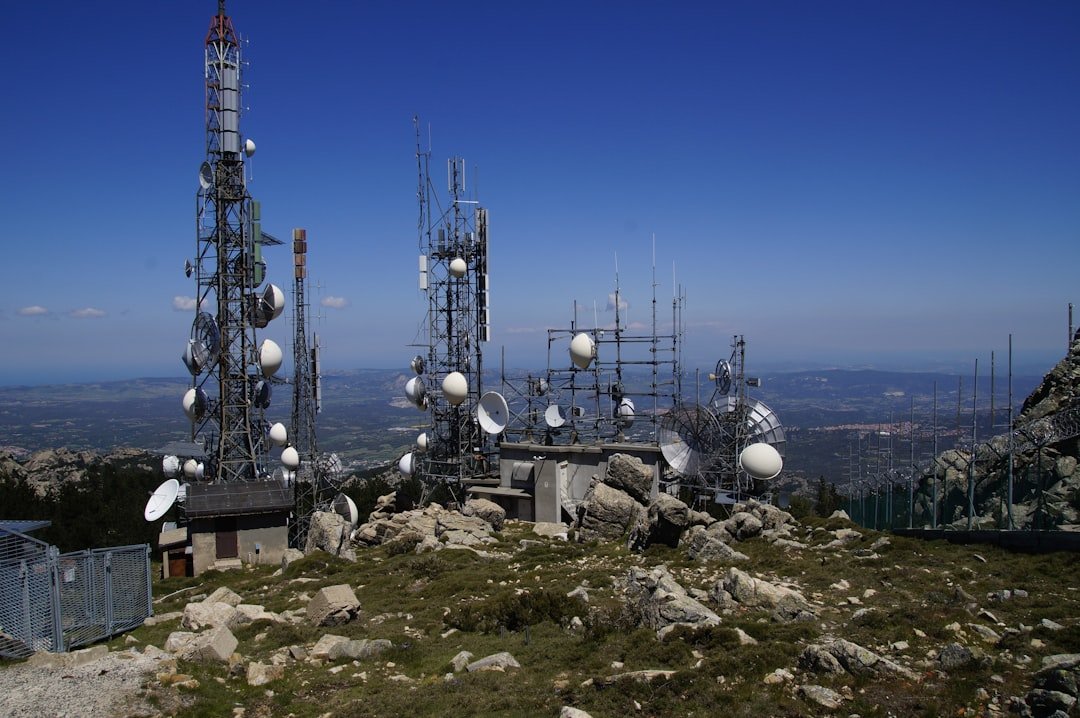

Huawei’s deployment of a 100 MHz 5G-A GigaUplink network across more than 10,000 base stations in Beijing marks a decisive shift toward infrastructure built for real-time, high-volume data uploads rather than conventional downlink optimization. The network’s measured performance—83 percent effective 100 MHz uplink coverage, a 397 Mbps average rate, and just 0.1 percent of locations falling below 20 Mbps—directly addresses the requirements of AI devices that generate large sensor streams on the edge and must push them to cloud analytics platforms without perceptible latency.
This infrastructure move coincides with parallel advances in Huawei’s device portfolio, automotive software stack, and energy systems. Together they illustrate a coherent strategy: create the connectivity layer that makes on-device and edge AI viable, then supply the hardware and platforms that consume that connectivity at scale.
Uplink Performance Meets Mobile AI Workloads
China Unicom Beijing and Huawei coordinated 3.5 GHz and 2.1 GHz spectrum to deliver continuous GigaUplink service along a 34-kilometer test route. Peak uplink speeds reached 1 Gbps, while 72 percent of measurements exceeded 300 Mbps—sufficient for simultaneous transmission from multiple vehicle-mounted AI cameras and glasses. The same drive test confirmed that AI phones could maintain stable agent-to-agent communication and that smart cameras could execute shoot-and-upload workflows without buffering.
These metrics matter because generative AI workloads invert traditional traffic patterns. Instead of users pulling content, sensors now push raw or lightly processed data to models running in the cloud. The Beijing deployment demonstrates that operators can meet this demand at city scale without sacrificing coverage at cell edges. China Unicom Beijing and Huawei launched the world’s largest 5G-A GigaUplink commercial network.
Refined Optics for Demanding Photographic Scenarios
The Pura 90s series introduces a 200 MP telephoto module built on a sensor size previously reserved for main cameras. The 89 mm f/2.6 optic maintains usability at dusk and in indoor venues, supported by CIPA 7.0 stabilization that keeps 4× to 8× crops sharp without digital interpolation. Although optical reach is limited to 4× compared with the prior generation’s 9.4× mechanical zoom, the larger aperture and sensor deliver higher signal-to-noise ratios in low light—precisely the conditions where mobile content creators operate.
The Pura 90s Pro Max review units also feature a variable-aperture main camera widened to f/1.4, increasing light intake by roughly 30 percent. These hardware choices reflect Huawei’s recognition that AI-enhanced photography now depends on raw optical quality rather than computational rescue of marginal exposures. Huawei Pura 90s Pro Max in for review.
Automotive Platforms Reach Volume Milestones
Qiankun Intelligent Driving installations have passed 1.9 million vehicles and are projected to exceed 2 million by the end of August 2026. Accumulated assisted-driving mileage stands at 12.8 billion kilometers, with forecasts surpassing 20 billion by year-end. The second million installations are expected within twelve months—less than one-third the time required for the first million—indicating accelerating adoption across more than 25 partner brands and 50 models.
The Epicland X9 will be the first production vehicle to combine ADS 5 with the HarmonySpace 6 cockpit. Over-the-air updates scheduled through early 2027 will progressively add scenario-based agents, in-cabin fused perception, and predictive service logic. Huawei’s stated role remains that of component supplier—an “electronic screw” supplying full-stack or modular solutions rather than complete vehicles. “Electronic Screw” Huawei: About to Be Installed in 2 Million New Cars.
Grid-Forming Technology Addresses Renewable Integration
At The Smarter E 2026 in Munich, Huawei Digital Power unveiled its updated grid-forming strategy for hybrid PV-BESS systems. European wind and solar penetration is projected to reach 64 percent by 2030, reducing system inertia and complicating frequency control. Huawei’s LUTERRA platform—evolved from the earlier LUNA energy storage line—targets black-start capability, inertia support, and short-circuit current contribution under all operating conditions.
The company positions these functions as prerequisites for treating renewables as primary rather than supplementary generation. Grid codes in several European markets already incorporate grid-forming requirements, shifting revenue opportunities from energy arbitrage toward ancillary services. Huawei’s integrated inverter-plus-storage architecture is designed to meet those requirements without additional synchronous condensers. Huawei Launches the latest Grid-Forming Strategy for Future Power Systems at The Smarter E 2026.
Tablet Refresh Extends Paper-Like Productivity
The MatePad Air (2026) replaces its predecessor’s IPS panel with a 12-inch OLED display running at 144 Hz and coated with Huawei’s PaperMatte finish. Thickness is reduced to 5.3 mm and weight to 509 grams, while a 10,100 mAh battery supports 66 W charging. The Kirin T93C chipset enables on-device AI features previously limited to higher-end tablets, and the device ships with keyboard and M-Pencil Pro support out of the box.
These specifications position the Air as a bridge between consumer tablets and professional productivity tools, particularly for users who value reduced glare during extended reading or annotation sessions. Huawei MatePad Air (2026) hands-on.
The common thread across these announcements is Huawei’s focus on closing the loop between data generation, transmission, and actionable intelligence. Uplink capacity, high-resolution sensors, vehicle autonomy stacks, grid-stabilizing inverters, and productivity tablets all address the same underlying requirement: moving large volumes of machine-generated data reliably and processing it with minimal human intervention. As regulatory frameworks, spectrum allocations, and grid codes continue to evolve, the ability to deliver this integrated capability at scale will determine which suppliers shape the next phase of AI-enabled infrastructure.