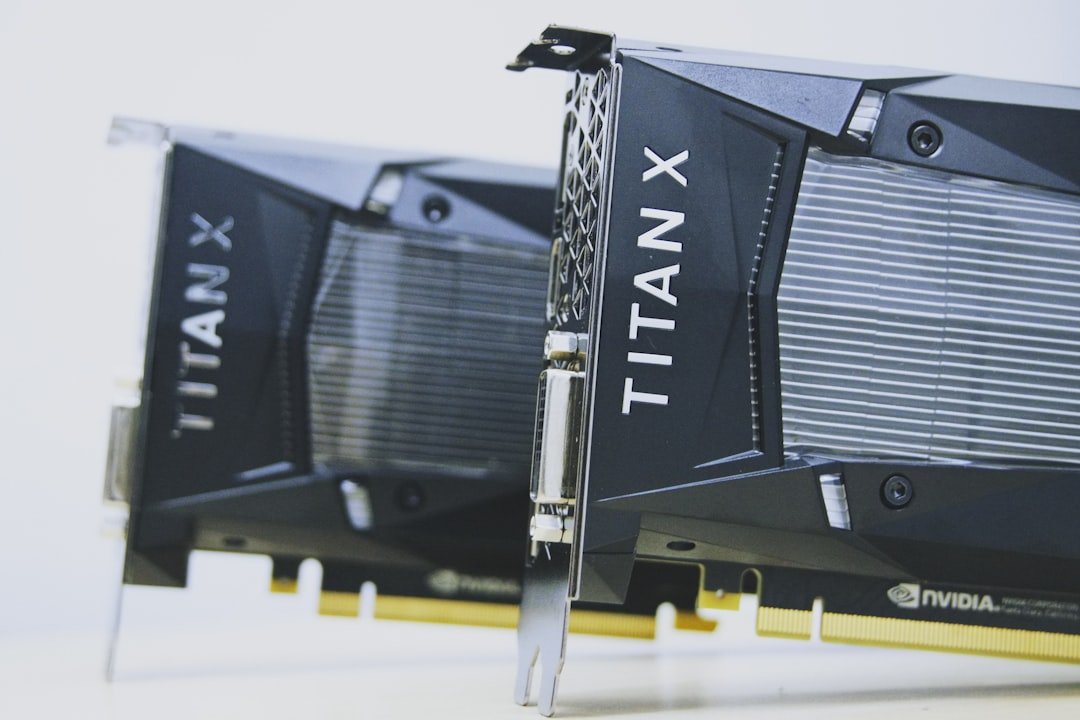

Introduction to NVIDIA’s Latest Developments
NVIDIA’s CEO, Jensen Huang, has made it clear that the company prioritizes national security over commercial opportunities, stating that “national security comes first” Nvidia’s Huang calls black market data centers made of smuggled parts a ‘dead end’. This stance is particularly relevant in the context of the company’s advancements in AI, as it navigates the complex landscape of export controls and geopolitical tensions. With its cutting-edge technologies, including the BioNeMo Agent Toolkit, NVIDIA is poised to revolutionize various industries, from life sciences to telecommunications.
The BioNeMo Agent Toolkit, announced recently, is a significant development in the field of life sciences, enabling AI agents to accelerate scientific discovery NVIDIA Announces BioNeMo Agent Toolkit — Tools for Agents to Accelerate Scientific Discovery. This toolkit provides domain-specific tools and skills for AI agents, allowing them to perform tasks such as protein structure prediction, molecular docking, and genomic analysis. By leveraging NVIDIA’s accelerated computing capabilities, researchers can now tackle complex scientific problems with unprecedented speed and accuracy.
NVIDIA’s commitment to advancing AI research is also evident in its efforts to improve inference performance. The company has introduced DFlash, a speculative decoding technique that can boost inference performance by up to 15x on NVIDIA Blackwell Boost Inference Performance up to 15x on NVIDIA Blackwell Using DFlash Speculative Decoding. This innovation has significant implications for applications such as code generation, where low-latency inference is critical.
Advancements in Life Sciences and Biomedical Research
The BioNeMo Agent Toolkit is a prime example of NVIDIA’s focus on life sciences and biomedical research. By providing AI agents with the necessary tools and skills, researchers can now tackle complex problems in fields such as protein structure prediction, molecular docking, and genomic analysis. The toolkit’s capabilities are accelerated by NVIDIA libraries such as cuEquivariance and Parabricks, allowing for faster and more accurate results Build an AI Scientist for Life Science Discovery with NVIDIA BioNeMo Agent Toolkit. This has the potential to accelerate the discovery of new medicines and treatments, revolutionizing the field of life sciences.
NVIDIA’s efforts in life sciences are also reflected in its partnerships with leading research institutions and companies. The company is working with organizations such as Dassault Systèmes, Databricks, and Lilly to advance the use of AI in life sciences NVIDIA Announces BioNeMo Agent Toolkit — Tools for Agents to Accelerate Scientific Discovery. These collaborations demonstrate the potential for AI to transform the field of life sciences, from drug discovery to patient care.
Impact on the Telecommunications Industry
NVIDIA’s advancements in AI are also having a significant impact on the telecommunications industry. The company is working with telecom operators to develop autonomous networks and operations, using AI agents to proactively monitor and manage network performance NVIDIA Brings Trusted, 24/7 AI Agents to Telecom Operations. This has the potential to improve network reliability, reduce downtime, and enhance overall customer experience. By leveraging NVIDIA’s AI capabilities, telecom operators can now build more resilient and efficient networks, better equipped to handle the demands of emerging technologies such as 5G and edge computing.
The use of AI in telecommunications also raises important questions about data privacy and security. As telecom operators increasingly rely on AI to manage their networks, they must ensure that sensitive customer data is protected and secure. NVIDIA’s focus on trusted and secure AI solutions is critical in this context, as it enables telecom operators to build autonomous networks that are both efficient and secure.
Accelerating Scientific Discovery with AI
NVIDIA’s AI software is also being used to accelerate scientific discovery in fields such as astronomy and materials science. The company’s cuPhoton reference code, for example, enables scientists to extract insights from multidimensional data collected from telescopes and laser experiments From Materials Simulation to Experimental Astronomy, New NVIDIA AI Software Unlocks Scientific Discoveries. This has the potential to revolutionize our understanding of the universe, from the behavior of dark matter to the properties of materials at the atomic level.
The use of AI in scientific research also highlights the importance of collaboration between industry and academia. NVIDIA’s partnerships with research institutions such as Princeton University demonstrate the potential for industry-academia collaborations to drive innovation and advance scientific knowledge From Materials Simulation to Experimental Astronomy, New NVIDIA AI Software Unlocks Scientific Discoveries. By working together, researchers and industry leaders can develop new AI technologies that accelerate scientific discovery and drive breakthroughs in fields such as astronomy and materials science.
Future Implications and Challenges
As NVIDIA continues to advance its AI capabilities, the company is likely to face significant challenges and opportunities in the future. One major challenge will be ensuring that its AI technologies are used responsibly and ethically, particularly in areas such as surveillance and autonomous systems. NVIDIA’s commitment to transparency and accountability will be critical in addressing these concerns and building trust with its customers and stakeholders.
The future of AI research also depends on the development of new technologies and innovations. NVIDIA’s efforts to improve inference performance, for example, will be critical in enabling the widespread adoption of AI in industries such as healthcare and finance. The company’s focus on emerging technologies such as digital twins and synthetic data will also be important in driving innovation and advancing the field of AI.
As the AI landscape continues to evolve, one thing is clear: NVIDIA is poised to play a leading role in shaping the future of this technology. With its commitment to advancing AI research, its focus on responsible and ethical AI development, and its partnerships with industry and academia, NVIDIA is well-positioned to drive innovation and breakthroughs in fields such as life sciences, telecommunications, and astronomy. As we look to the future, it will be exciting to see how NVIDIA’s AI technologies continue to transform industries and revolutionize our understanding of the world.