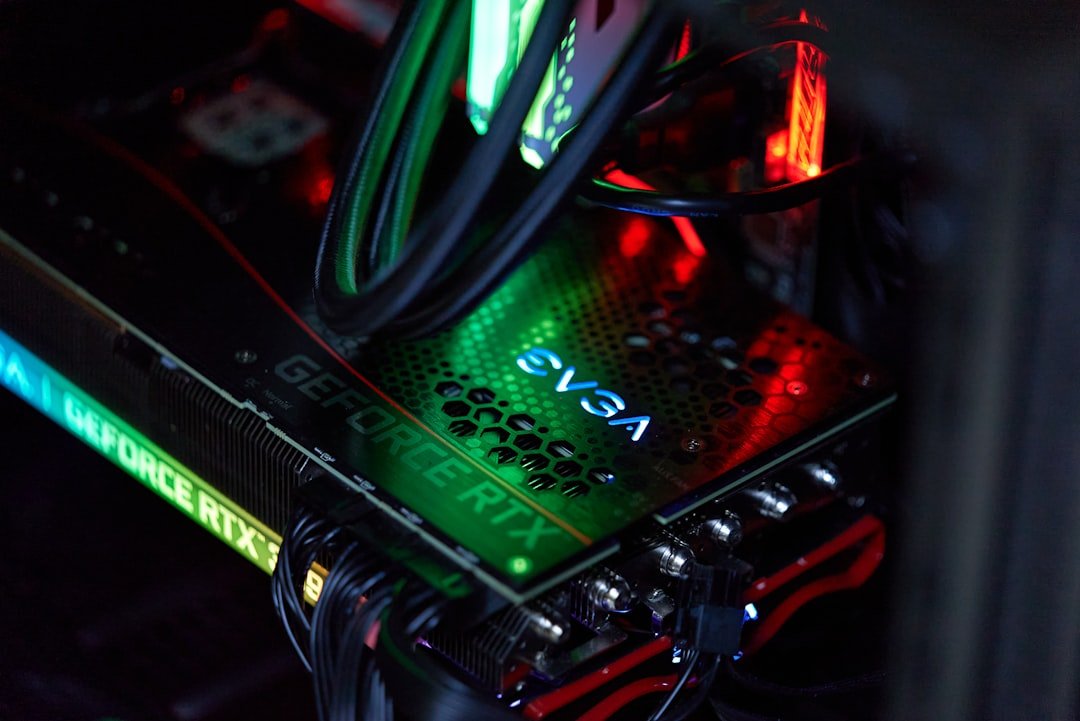

Revolutionizing Creative Workflows: Adobe and NVIDIA’s Groundbreaking Partnership
The world of creative professionals has just gotten a significant boost, courtesy of a pioneering partnership between Adobe and NVIDIA. This collaboration is set to redefine the boundaries of what is possible in creative workflows, thanks to the integration of NVIDIA’s cutting-edge RTX Spark technology with Adobe’s iconic applications like Photoshop and Premiere. By harnessing the power of AI, editing, coloring, and effects across these creative workflows are expected to see a substantial speed increase of up to 2x, significantly reducing wait times and allowing creators to bring their visions to life at an unprecedented pace.
At the heart of this partnership is the understanding that creativity knows no bounds, and the tools that facilitate it should be equally limitless. Adobe’s decision to optimize its creative apps with NVIDIA’s RTX Spark superchip marks a significant step towards realizing this vision. RTX Spark is not just an incremental update; it represents a leap forward in technology, designed to deliver powerful experiences that were previously unimaginable. With its unified memory, Blackwell GPU, and TensorRT, Premiere and Photoshop are poised to offer real-time performance, faster rendering, and AI-accelerated capabilities that will redefine the creative process.
Unlocking the Potential of Physical AI
Beyond the realm of creative workflows, NVIDIA is making waves in the domain of physical AI, particularly with the release of its Alpamayo 2 Super model. This 32-billion-parameter reasoning-based vision language action (VLA) model is a game-changer for the development of autonomous vehicles and robotaxis. By providing humanlike perception, reasoning, and action capabilities, Alpamayo 2 Super eliminates the need for developers to build key autonomy infrastructure from scratch. This not only accelerates the development process but also paves the way for safer and more efficient autonomous systems.
NVIDIA’s commitment to advancing physical AI is further underscored by its launch of agent tools and skills for physical AI development. These tools, part of the NVIDIA Agent Toolkit, are designed to turn complex physical AI training, evaluation, and deployment workflows into repeatable, optimized, and agent-executable instructions. Industry leaders are already leveraging these tools to accelerate physical AI development, marking a significant shift towards more efficient and scalable AI workflows.
The Convergence of AI and Semiconductor Manufacturing
In a move that highlights the increasingly interconnected nature of technology and manufacturing, NVIDIA and TSMC are collaborating to bring AI into the semiconductor design and manufacturing process. This partnership aims to leverage NVIDIA’s accelerated computing and AI capabilities to improve the efficiency, speed, and yield of semiconductor production. By applying AI to tasks such as computational lithography, transistor simulation, and process control, TSMC seeks to overcome some of the most complex challenges in semiconductor manufacturing.
The implications of this collaboration are far-reaching. As the semiconductor industry continues to push the boundaries of what is possible in terms of chip design and manufacturing, the integration of AI is set to play a pivotal role. NVIDIA’s technologies, including its CUDA-X libraries and AI models, are poised to accelerate TSMC’s workloads, leading to faster turnaround times, improved energy efficiency, and higher productivity in advanced fabs.
Empowering Healthcare with Agentic AI
The potential of agentic AI to transform industries extends beyond manufacturing and creative workflows to the critical domain of healthcare. NVIDIA, in partnership with Foxconn and Taiwan’s leading medical centers, is deploying NVIDIA-powered special agent workforces to scale the region’s transition to AI-driven health systems. This initiative, part of the “Healthy Taiwan” program, aims to address the challenges posed by aging populations and clinician shortages by leveraging AI to enhance care coordination, patient outcomes, and operational efficiency.
The introduction of agentic AI in healthcare represents a paradigm shift, moving from individual AI tools to coordinated AI agent workforces that can reason, document, and orchestrate care. With NVIDIA’s technology at its core, this approach promises to revolutionize the way healthcare is delivered, making it more adaptive, responsive, and patient-centric. As the healthcare sector continues to evolve, the integration of agentic AI is poised to play a critical role in shaping its future.
The Future of Computing: NVIDIA Vera CPU and RTX Spark
The recent announcements from NVIDIA, including the unveiling of its Vera CPU and RTX Spark, signal a new era in computing. Designed to meet the demands of agentic workloads and personal AI agents, these technologies represent a significant leap forward in performance, efficiency, and capabilities. The NVIDIA Vera CPU, with its focus on shortening CPU execution time and increasing task throughput, is set to redefine the standards for AI factories and agentic workloads.
RTX Spark, on the other hand, is poised to revolutionize the world of personal computing, offering a new class of computer that moves from tool to teammate. By combining 30 years of NVIDIA innovation, including CUDA, RTX, DLSS, and TensorRT, RTX Spark brings together the power of AI, creating, and gaming in slim laptops and compact desktops. This convergence of technologies marks a new chapter in personal computing, one that is centered around AI, collaboration, and unparalleled performance.
Looking Ahead: The Broader Implications
As the technology landscape continues to evolve at a rapid pace, one thing is clear: the future will be shaped by the symbiotic relationship between AI, computing, and industry. The developments outlined above, from the Adobe-NVIDIA partnership to the advancements in physical AI and semiconductor manufacturing, are not isolated events but part of a larger narrative. They represent a push towards a more interconnected, efficient, and intelligent world, where technology and human ingenuity come together to solve complex problems and create new opportunities.
The journey ahead will be marked by challenges and opportunities in equal measure. As industries and societies adapt to the changing technological landscape, there will be a need for continuous innovation, collaboration, and investment in the technologies that are shaping our future. The question is not what the future of technology holds, but how we will harness its potential to create a better, more sustainable, and more equitable world for all.