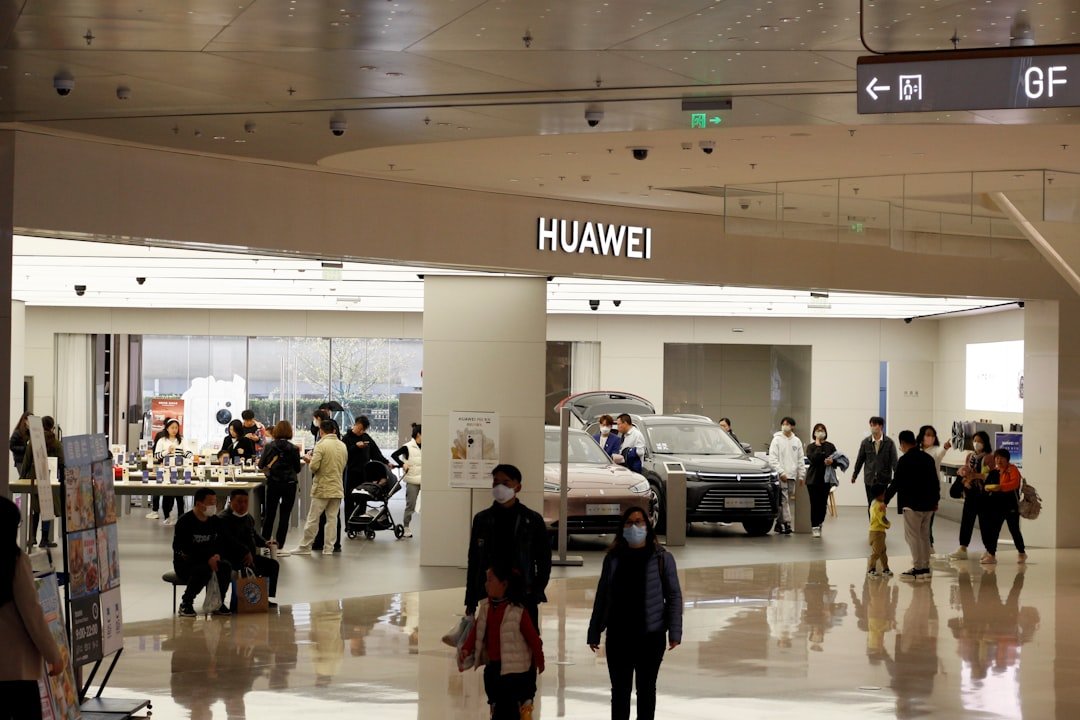

Chinese AI startup DeepSeek has thrust a new wedge into the global AI race with its V4 model, a 1.6-trillion-parameter behemoth that runs natively on Huawei’s sanctioned Ascend chips and undercuts U.S. rivals’ pricing by up to 50 times. Released in preview on April 24, 2026, the open-source V4-Pro and lighter V4-Flash variants boast performance that trails only marginally behind OpenAI’s GPT-5.4 and Anthropic’s Claude Opus 4.6, while supporting a massive 1 million-token context window—equivalent to processing roughly 750,000 words at once DeepSeek V4 model details. This isn’t just incremental progress; it’s a demonstration of China’s accelerating path to AI self-reliance, sidestepping U.S. export controls on advanced semiconductors.
The stakes couldn’t be higher. With Nvidia’s GPUs dominating AI training and inference worldwide, DeepSeek’s “day zero” compatibility with Huawei’s latest Ascend 950PR and 950DT chips signals a viable alternative ecosystem Huawei-DeepSeek collaboration. As inference workloads—running trained models for real-world applications—are projected to eclipse training demands by 2030 per McKinsey, this hardware-software synergy positions China to capture a growing slice of the $1 trillion AI market. Yet it also exposes vulnerabilities: DeepSeek’s models still lag U.S. frontiers by three to six months, highlighting persistent gaps in raw compute scale despite efficiency gains.
DeepSeek V4: Frontier Performance on a Shoestring Budget
DeepSeek’s V4 lineup redefines open-source AI benchmarks. The V4-Pro, with its 1.6 trillion parameters, claims superiority over all other open models in agentic coding and reasoning tasks, edging out rivals in arenas like math and long-context retrieval V4 technical benchmarks. Its technical report admits a slight shortfall against closed U.S. models—”marginally short of GPT-5.4 and Gemini 3.1 Pro”—but the 1 million-token context, up from V3’s 128,000, enables unprecedented handling of complex documents or codebases without truncation.
This efficiency stems from architectural innovations, including mixture-of-experts (MoE) sparsity refined across DeepSeek’s lineage. V2’s training cost was 1/70th of GPT-4 Turbo; V3 hit 1/14th of GPT-4; now V4 extends that curve, validated in parallel on Huawei Ascend NPUs and Nvidia GPUs DeepSeek efficiency curve. For enterprises, this means deploying agentic workflows—autonomous AI systems that code, debug, and iterate—without the parameter bloat of denser models like Llama 3.1.
Business-wise, the open-source MIT license invites global developers to fine-tune V4, potentially fragmenting the proprietary moat of OpenAI and Anthropic. Yet the real disruption lies in inference optimization: Huawei’s Compute Architecture for Neural Networks (CANN), akin to Nvidia’s CUDA, enabled “full adaptation” across Ascend SuperNode lines just hours post-release Huawei CANN support. As Chinese firms like Cambricon echo compatibility, domestic chip uptake could surge, per Huatai Securities analysts.
Pricing That Upends AI Economics
DeepSeek’s API rates obliterate competitors: V4-Pro output at $3.48 per million tokens, with Flash input at $1 (dropping to $0.20 on cache hits) and output at $2—roughly 50 times cheaper than GPT-5.4 or Claude Opus 4.6 equivalents V4 pricing breakdown. This isn’t promotional bait; it’s structural. Prior models slashed training costs exponentially, aligning with Sam Altman’s observation of 10x annual AI cost drops outpacing Moore’s Law.
For cloud providers and SMBs, V4 democratizes high-end AI. A mid-sized firm running inference on customer queries could slash bills from thousands to hundreds monthly, fueling adoption in e-commerce personalization or legal document analysis. U.S. labs, burdened by $100 million+ training runs and opex-heavy clusters, face margin erosion. Anthropic’s Claude, for instance, justifies premiums via safety alignments, but V4’s benchmarks suggest comparable utility at commodity prices Benchmark comparisons.
The catch? Ultra-low pricing assumes Huawei-scale efficiencies, unproven at global hyperscalers. Still, as open-source V4 floods Hugging Face, commoditization accelerates, pressuring incumbents to match or pivot to enterprise services.
Huawei Ascend Chips Challenge Nvidia’s Ecosystem Lock
Nvidia CEO Jensen Huang once called Huawei’s advances a “disaster,” and V4 proves prescient: DeepSeek’s native Ascend adaptation erodes CUDA’s software moat Huang’s disaster quote context. Huawei’s livestream demo showcased seamless V4 inference on Ascend 950 series, with CANN delivering “significantly improved” performance via pre-release collaboration Ascend day-zero support.
Technically, Ascend NPUs excel in sparse MoE workloads, mirroring V4’s architecture for lower FLOPs per token. While trailing Nvidia H100s in raw teraflops, Huawei’s full-stack—from chips to supernodes—closes the loop for sanctioned markets. SMIC shares jumped 10% on news, as the foundry produces these processors Market impact on SMIC.
Implications ripple globally: U.S. firms risk bifurcation, with China-centric stacks like DeepSeek-Huawei gaining in Belt-and-Road nations. Competitors MiniMax and Knowledge Atlas tanked 9%, underscoring ecosystem lock-in’s power.
Stock Swings and Broader Market Tremors
V4’s debut triggered volatility: SMIC soared 10% in Hong Kong, rewarding its role in Huawei’s supply chain, while DeepSeek rivals shed over 9% Chinese chip stock reactions. This reflects investor bets on China’s AI hardware pivot amid U.S. curbs.
Beyond stocks, V4 spotlights open-source’s resurgence. Released pre-OpenAI’s Agent launch, it courts developers with full technical reports, enabling local runs on consumer hardware for Flash V4 open-source details. For U.S. labs, the moat narrows—performance parity plus cost advantages erode $200 billion valuations.
Huawei’s Multi-Front Tech Surge
Huawei amplifies this via diversification. OceanProtect earned Gartner Peer Insights’ Customers’ Choice for the second year, with a 4.9/5 rating from 241 reviews across finance to healthcare, touting 100% recommend willingness Gartner recognition. In EVs, CNY 70 billion ($10B) over five years targets smart driving, including CNY 10B for AI compute in 2026, powering 38 models with partners like Chery Smart driving investments.
FusionSolar 9.0 optimizes PV lifecycles for lower LCOE via kV AC inverters supporting 11MW arrays Solar tech launch. Wearables like Watch Fit 5 Pro add ECG and 10-day battery Watch Fit 5. This ecosystem funnels data into AI training loops, fortifying self-reliance.
As DeepSeek-Huawei scales, U.S. dominance frays—not from overnight parity, but relentless efficiency compounding. Nvidia’s CUDA empire faces true rivals; OpenAI’s premiums, sustainability scrutiny. Enterprises worldwide recalibrate: source domestically for cost, or pay for “frontier” assurances? The compute wars evolve from chips to stacks, with China scripting an audacious counternarrative. What happens when 50x cheaper AI floods emerging markets? The global ledger tips.