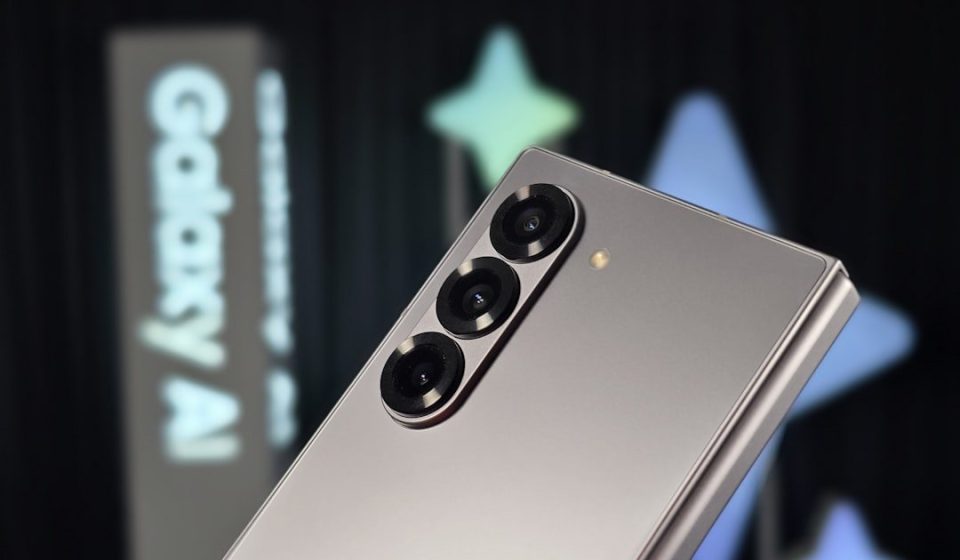

Samsung’s latest wave of hardware and software announcements underscores a widening gap in product longevity, with flagship smartphones facing sharply different update trajectories while the company simultaneously pushes extreme performance boundaries in displays and audio gear.
The contrast is especially stark in software support. Devices launched just a year apart now diverge in how long they will receive major operating system upgrades, a reality that forces users to weigh ecosystem loyalty against hardware refresh cycles. At the same time, Samsung’s monitor division is betting that refresh rates exceeding 1,000 Hz and multi-mode OLED panels will redefine competitive gaming, even as legal disputes over digital watch faces reveal the risks of borrowing luxury aesthetics for smartwatch interfaces.
These moves collectively illustrate how Samsung is balancing aggressive innovation with the practical constraints of update policies, component sourcing, and intellectual property.
Divergent Software Lifespans Across Galaxy Flagships
The upcoming One UI 9 release, built on Android 17, will reach the Galaxy S24 Ultra and S23+ but bypass the S22+ and the six-year-old S20 entirely. The S24 Ultra benefits from Samsung’s seven-year promise, positioning it to receive updates through 2031 and making One UI 9 merely its third major OS upgrade. In contrast, the S23+ launched under the prior four-year policy and will see One UI 9 as its final major version, after which security patches shift to quarterly cadence for one additional year.
This split creates tangible planning challenges for owners of older devices. The S20, already dropped from major updates, now risks missing critical security fixes once its original support window closes, despite having proven reliable in daily use. Meanwhile, the S24 series continues to receive timely feature drops that align Samsung with Google’s Pixel lineup and Apple’s extended support averages.
The policy change signals a strategic pivot toward rewarding recent buyers, yet it also exposes the uneven transition period between old and new commitments. Consumers who purchased flagships during the four-year era now face accelerated obsolescence relative to newer models, a dynamic that could influence upgrade timing and secondary-market values.
Extreme Refresh Rates Redefine Gaming Monitor Expectations
Samsung’s 2027 Odyssey lineup, unveiled at Gamescom, introduces the 27-inch Odyssey G6 capable of 1,100 Hz in HD mode or 600 Hz at QHD through a dual-mode IPS panel. The 49-inch OLED G9 offers 360 Hz at Dual QHD or 720 Hz when resolution drops, while the 32-inch OLED G8 provides triple-mode switching between 4K at 360 Hz, QHD at 520 Hz, and FHD at 680 Hz. These specifications target players seeking to eliminate refresh-rate bottlenecks across competitive, cinematic, and multi-purpose setups.
The performance leap carries direct implications for esports hardware standards. At 1,100 Hz, motion clarity reaches levels previously unattainable on consumer displays, potentially shifting competitive play toward higher frame-rate rendering pipelines. Samsung’s use of fifth-generation Penta Tandem QD-OLED panels in the G9 and G8 further promises improved efficiency and longevity compared with prior generations, addressing one of OLED’s historical drawbacks in high-refresh applications.
Competitors will need to respond with comparable variable-refresh architectures or risk losing ground in the premium gaming segment. The absence of a 25-inch QD-OLED announcement suggests Samsung is prioritizing larger formats where dual- and triple-mode flexibility delivers the greatest differentiation.
Intellectual Property Risks in Smartwatch Feature Design
A London High Court ruling ordered Samsung to pay Swatch Group $11.6 million after its smartwatches displayed downloadable faces replicating designs from Omega, Breguet, and Tissot. The court found the low-cost availability of these replicas damaging to the luxury brands’ positioning, even though Samsung removed the apps once notified. A parallel U.S. case remains pending, and a prior 2022 ruling already established liability on similar grounds.
The decision highlights the tension between rapid feature iteration in wearables and the need for robust third-party app vetting. Allowing users to download luxury watch faces for minimal or no cost directly undercuts the exclusivity that Swiss manufacturers cultivate, regardless of whether the replicas are technically accurate. Samsung’s defense that it acted promptly after awareness did not mitigate the reputational harm cited by the judge.
For device makers integrating extensive customization ecosystems, the ruling sets a precedent that downstream app content can trigger upstream liability. Future smartwatch platforms may require stricter pre-approval processes or technical restrictions on third-party face rendering to avoid similar exposure.
Iterative Improvements Elevate Wireless Audio Reliability
Six months of daily use have positioned the Galaxy Buds 4 Pro as a consistent preference over both prior Samsung models and competing premium earbuds. The redesign addressed core complaints from the Buds 3 Pro—particularly ANC performance and gesture reliability—by reverting to a more conventional stem shape with intuitive pinch-and-swipe controls. Comfort improvements allow extended wear without fatigue, though silicone tips still limit sessions beyond four or five hours for some users.
Samsung’s decision to refine fundamentals rather than layer additional AI features appears to have paid off in real-world retention. Seamless integration with Galaxy S25 devices, including higher-bitrate codecs and personalized hearing profiles, further cements the Buds 4 Pro within the ecosystem, yet the hardware upgrades alone explain why reviewers have not reverted to older pairs.
The trajectory suggests Samsung has reached a maturation point in audio hardware where incremental fixes to comfort, controls, and noise cancellation yield greater user loyalty than radical form-factor experiments.
User-Driven Camera Customization Unlocks Consistent Aesthetics
Samsung’s hidden custom filter tool allows any photo to serve as a reference for generating a reusable preset directly in the stock camera app. By analyzing an imported image’s color palette, mood, and grading, the software creates a filter that can be applied live in the viewfinder, bypassing the limitations of generic stock presets that often oversaturate or introduce unnatural casts.
This capability reduces reliance on post-capture editing workflows in applications such as Lightroom. Users can now replicate specific aesthetic signatures—whether from social media or personal archives—without manual parameter tuning, lowering the barrier to consistent output across casual photography sessions.
The feature’s placement within an already dense settings menu underscores how powerful tools can remain underutilized until discovered through experimentation. Its adoption could shift more editing decisions upstream into capture, altering typical smartphone photography pipelines.
Samsung’s simultaneous emphasis on long-term software support for recent flagships, record-setting display performance, and careful navigation of intellectual property boundaries reveals a company managing multiple maturity curves at once. The real test will be whether these refinements translate into sustained user retention as competitors match individual advances in refresh rates, audio ergonomics, and creative controls.