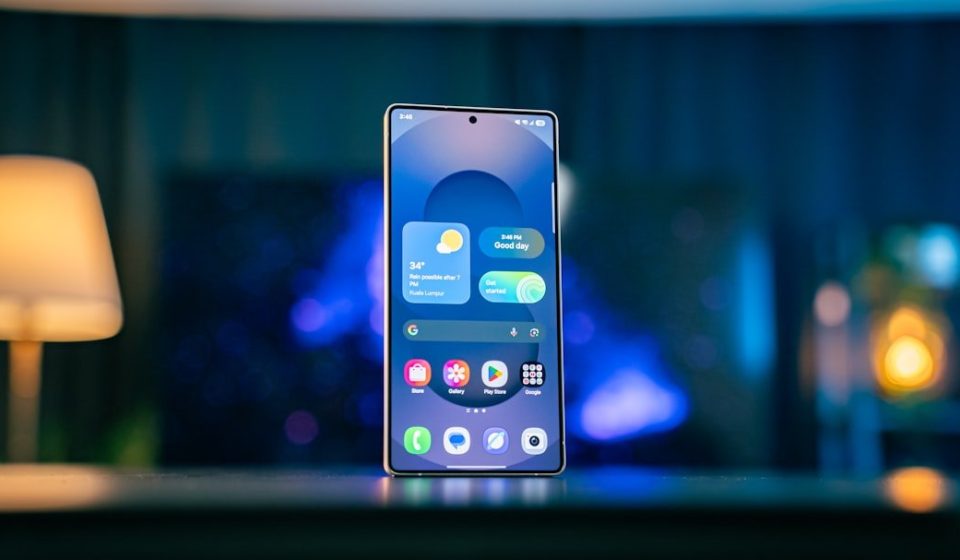

Samsung Electronics delivered record quarterly revenue of 171.5 trillion won while simultaneously posting its first operating loss in the mobile business, exposing how surging memory prices tied to artificial intelligence infrastructure are reshaping profitability across consumer electronics.
The 800 billion won ($544 million) loss in the DX division, driven primarily by the Mobile eXperience unit, occurred even as flagship Galaxy S26 series and A-series devices posted solid year-over-year sales growth. This outcome illustrates a structural shift: component costs, particularly high-bandwidth memory and advanced storage, have risen sharply because AI training and inference workloads now dominate semiconductor demand. Samsung’s own Device Solutions division capitalized on that demand, posting all-time highs in memory revenue and operating profit. The divergence between the two divisions reveals both the opportunities and the vulnerabilities created by the current AI cycle.
Memory Costs Reshape Smartphone Economics
Rising DRAM and NAND prices have compressed margins most severely in mid-range and budget smartphones, where thin pricing leaves little room for component inflation. Samsung explicitly linked the mobile loss to “increased cost burdens across the industry, such as rising component costs,” noting that flagship models like the Galaxy S26 Ultra and Z Fold 8 series continued to deliver acceptable profit. Budget devices, however, absorbed the full impact of higher memory expenses without corresponding price increases that consumers would accept.
The company now plans to shift emphasis toward higher-value-added products. This strategy carries clear risks: any slowdown in premium demand would leave Samsung exposed in the very segment it hopes will offset margin pressure. At the same time, Samsung’s vertical integration provides a buffer unavailable to most rivals. Its memory business directly benefits from the same AI-driven demand that hurts its phone margins, creating an internal hedge that few competitors can replicate.
Foldable Lineup Tests Premium Pricing Resilience
Samsung unveiled the Galaxy Z Flip 8, Z Fold 8, and Z Fold 8 Ultra at its July 2026 Unpacked event, with preorders opening immediately and shipments scheduled for August 7. Pricing starts at $1,199 for the Flip 8, $1,899.99 for the standard Fold 8, and $2,099.99 for the Ultra model—each $100 higher than the prior generation. The increases reflect both upgraded specifications and the broader memory cost environment.
Design continuity dominates the new foldables. Leaks indicate incremental chipset and AI feature updates rather than major hardware redesigns, a pragmatic response to component shortages and elevated pricing. The cover screen on the Flip 8 retains the edge-to-edge camera wrap introduced last year, while the Fold series emphasizes software refinements over structural changes. Whether consumers will absorb the higher prices remains uncertain, particularly as competing slab-style flagships also face upward pressure on bill-of-materials costs.
Chip Stocks Rally on Renewed AI Spending Signals
Samsung and SK Hynix shares surged sharply in Seoul after stronger-than-expected cloud results from Amazon and Microsoft, with Samsung climbing nearly 27 percent and SK Hynix nearly 30 percent in a single session. The rally reversed earlier concerns about AI valuation and potential oversupply from Chinese memory makers. Microsoft’s Azure growth and Amazon’s cloud revenue beat reassured investors that capital spending on AI infrastructure remains robust rather than peaking.
The rebound extended beyond memory suppliers to equipment makers such as Advantest and Tokyo Electron, underscoring how tightly smartphone economics now track hyperscale AI demand. Samsung’s memory division, already reporting record quarterly results, stands to benefit further if the spending cycle continues. Yet the same dynamic that lifts semiconductor profits continues to pressure the company’s handset margins, illustrating the dual-edged nature of AI-driven semiconductor demand.
Software and Ecosystem Momentum Shift Competitive Balance
Independent testing of the Galaxy S26 Ultra against the iPhone 17 Pro Max shows Samsung widening its lead in software stability, customization depth, and notification management. One UI 8.5 delivers smoother performance and clearer prioritization than iOS 26, reversing a long-standing perception that Apple held the advantage in polish. Galaxy AI features, while still maturing, provide tangible capabilities that Apple Intelligence has yet to match consistently.
The comparison highlights a strategic divergence. Samsung has iterated steadily on both hardware and software, while Apple’s recent releases have emphasized incremental refinements. For users already frustrated with iOS notification handling or limited customization, the S26 Ultra now represents a lower-friction migration path. Ecosystem lock-in remains powerful, but the performance gap has narrowed enough that software experience, rather than hardware specifications alone, increasingly determines platform preference.
Capacity Investments Signal Long-Term Supply Ambitions
Samsung intends to begin construction on a second semiconductor fabrication plant in Taylor, Texas, by the end of 2026. The move expands U.S. manufacturing capacity at a moment when memory and logic demand from AI workloads shows no sign of easing. Geographic diversification also addresses geopolitical risks that have prompted multiple chipmakers to establish non-Asian production footprints.
The investment aligns with Samsung’s broader positioning as both a leading memory supplier and a major smartphone OEM. Additional U.S. capacity could eventually support more localized supply chains for North American device assembly, though the immediate priority remains serving the insatiable appetite for high-bandwidth memory in data centers. How quickly the new facility reaches volume production will influence both Samsung’s cost structure and its ability to meet demand from its own mobile division and external customers.
These developments collectively point to an industry in which AI infrastructure spending continues to dictate component pricing, profitability, and strategic investment across the entire electronics value chain. The question now is whether smartphone demand can absorb sustained higher costs or whether volume growth will slow as prices rise.