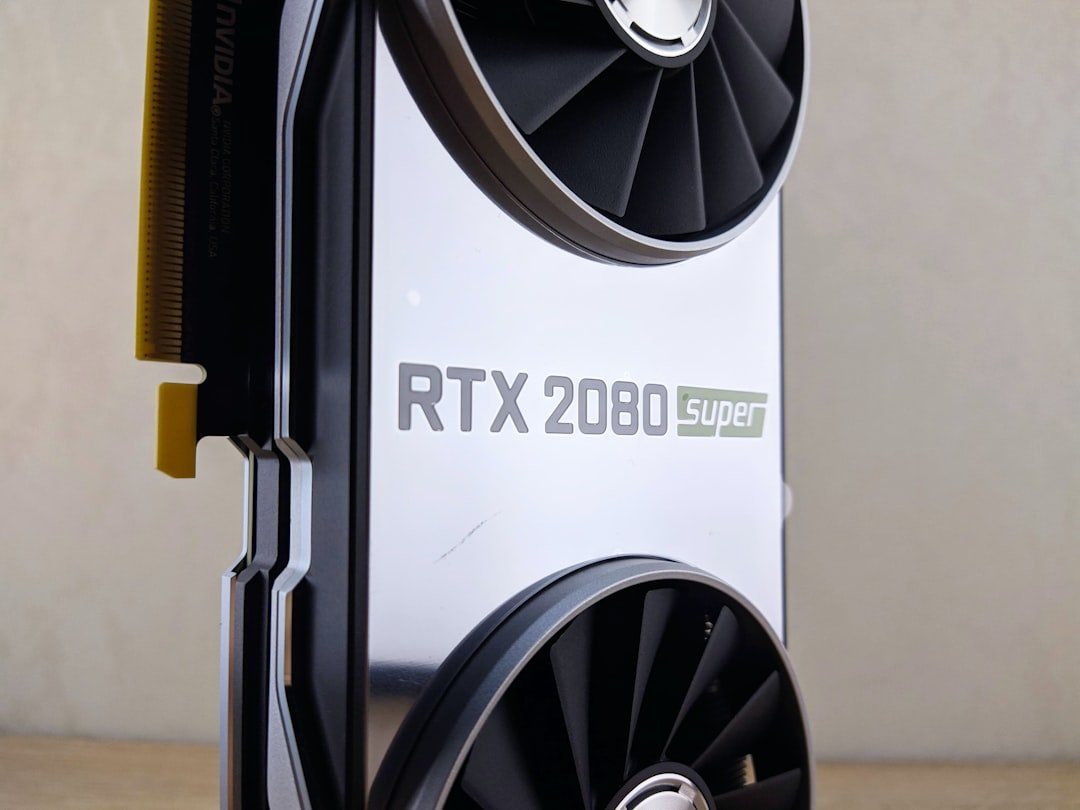

NVIDIA’s recent endeavors in South Korea and advancements in AI technology have underscored the company’s commitment to revolutionizing the future of artificial intelligence. The visit of NVIDIA’s founder and CEO, Jensen Huang, to Seoul, where he met with partners and unveiled RTX Spark, highlights the significance of the country in the development of cutting-edge AI infrastructure and robotics innovations. As Huang noted during his visit, “Robotics is going to be the next major sector here in Korea — this is a great opportunity for Korea to invest in AI.” This statement sets the stage for exploring the intersections of AI, robotics, and innovation, particularly in the context of NVIDIA’s strategic moves.
The alignment of NVIDIA’s goals with South Korea’s burgeoning tech landscape is not coincidental. South Korea is renowned for its passionate gaming community, cutting-edge technology, and innovative spirit, making it an ideal hub for NVIDIA to foster partnerships and drive AI adoption. The introduction of RTX Spark in PC bangs (gaming centers) across Seoul, in collaboration with KRAFTON and NC, demonstrates NVIDIA’s push to make advanced AI technologies accessible to a broader audience. This move not only enhances gaming experiences but also lays the groundwork for more complex AI applications in fields like robotics and autonomous systems. As seen in the launch events, the fusion of AI and gaming can lead to unprecedented levels of immersion and interaction.
Advancements in AI Technology
NVIDIA’s release of Nemotron 3 Ultra marks a significant leap in AI capabilities, especially for long-running agents that require sustained reasoning and context maintenance. This 550B-parameter Mixture-of-Experts model is designed to handle the complex, high-level reasoning tasks that are beyond the capabilities of simpler models. By achieving 5x higher throughput compared to other models in its class, Nemotron 3 Ultra enables long-running agents to complete tasks more efficiently and at a lower cost. This advancement has profound implications for the development of more sophisticated AI systems that can engage in prolonged interactions, such as advanced chatbots, autonomous vehicles, and smart home devices. The efficiency and speed of Nemotron 3 Ultra, as detailed in the NVIDIA Technical Blog, position it as a critical component in the next generation of AI applications.
Physical AI and Autonomous Systems
The introduction of NVIDIA Cosmos 3, a world foundation model that combines vision reasoning and multimodal generation, is a pivotal step towards enabling physical AI systems to “think before they act.” Cosmos 3 is designed to predict outcomes in dynamic environments, such as warehouses, roads, and factories, by understanding not just the current state but also the potential future states of these environments. This capability is crucial for the development of autonomous vehicles, robots, and smart spaces that can operate safely and efficiently in real-world conditions. As explained in the NVIDIA Blog, Cosmos 3 addresses the challenge of capturing and recreating real-world scenarios, which is currently slow, expensive, and often impossible to scale. By generating world data with physical context, Cosmos 3 empowers developers to create more realistic and responsive AI systems.
Industry Implications and Competitive Landscape
The strategic moves by NVIDIA, including its partnerships in South Korea and the release of Nemotron 3 Ultra and Cosmos 3, signal a significant shift in the AI landscape. These developments underscore NVIDIA’s commitment to driving innovation and setting new standards for AI performance and efficiency. The company’s focus on both the software and hardware aspects of AI positions it uniquely in the market, allowing for comprehensive solutions that cater to a wide range of applications, from gaming and robotics to autonomous vehicles and smart cities. As the AI industry continues to evolve, NVIDIA’s advancements are likely to influence the competitive landscape, pushing other players to innovate and invest in similar technologies. The announcement of Cosmos 3 at NVIDIA GTC Taipei highlights the company’s proactive approach to addressing the future needs of the AI ecosystem.
Future of AI and Robotics
The future of AI and robotics is intricately linked with the advancements being made today. As AI systems become more sophisticated and capable of complex reasoning and prediction, their integration into robotics and autonomous systems will become more prevalent. The potential for robots and autonomous vehicles to operate with human-like intelligence in dynamic environments is not only fascinating but also fraught with challenges. Ensuring the safety, efficiency, and ethical operation of these systems will be paramount. NVIDIA’s work on Nemotron 3 Ultra and Cosmos 3 is a step towards addressing these challenges, but it also opens up new avenues for innovation and application. As Jensen Huang emphasized, the opportunity for Korea and other regions to invest in AI and robotics is significant, and the impact of these technologies will be felt across various sectors.
Broader Implications and Looking Ahead
The advancements in AI technology, as exemplified by NVIDIA’s recent developments, have profound implications for society, economy, and industry. As AI becomes more pervasive, its influence will extend beyond the tech sector, impacting education, healthcare, transportation, and more. The ability of AI systems to learn, reason, and interact with their environment in a more human-like way will redefine the boundaries of what is possible. However, this also raises important questions about the future of work, privacy, and the ethical use of AI. As we look ahead, it’s clear that the path forward will require careful consideration of these issues, alongside continued innovation and investment in AI technologies. The interplay between technological advancement, societal need, and ethical responsibility will shape the future of AI, and companies like NVIDIA are at the forefront of this journey.
The trajectory of AI development, driven by innovations like those from NVIDIA, promises a future where technology seamlessly integrates with daily life, enhancing efficiency, safety, and experience. Yet, this future also demands a nuanced understanding of the complex interactions between technology, society, and ethics. As we embark on this journey, the question remains: how will we harness the power of AI to create a better, more sustainable world for all? The answer, much like the future of AI itself, is still unfolding.