
Samsung’s Bold AI Push: KKR’s $820 Million Bet Fuels Enterprise Transformation
In a sharp rally that underscored investor enthusiasm for artificial intelligence infrastructure, shares of Samsung SDS rocketed nearly 20% following a landmark $820 million investment from global private equity giant KKR. The deal, structured as 1.22 trillion won in newly issued convertible bonds, positions Samsung SDS—a key affiliate of Samsung Group—as a frontrunner in full-stack AI solutions amid exploding demand for cloud-native AI deployments. Closing the week up 17.89% after peaking at 21.3%, the stock surge reflects broader market conviction in Samsung’s ability to capitalize on digital transformation trends.Samsung SDS shares jump 20% on KKR partnership
This infusion arrives as enterprises worldwide grapple with AI’s compute-intensive realities, from hyperscale data centers to edge inference. Samsung SDS, already entrenched in cloud services, logistics optimization, and digital transformation for global clients, gains KKR’s expertise in M&A, capital allocation, and international scaling. “Through this strategic collaboration, we will actively explore a wide range of growth opportunities,” stated Samsung SDS CEO Jun Hee Lee. For an industry where AI capex is projected to exceed $200 billion annually by 2027, such partnerships signal a maturing ecosystem where IT service providers like Samsung SDS evolve from enablers to full-stack orchestrators—building everything from GPU clusters to enterprise-ready AI agents.
These moves ripple across Samsung’s portfolio, intertwining enterprise ambitions with consumer innovations. Price hikes on premium devices, enhanced productivity tools like DeX, and a pivot away from compact phones reveal a cohesive strategy: prioritizing larger screens and AI-driven workflows to meet evolving user demands in both B2B and B2C arenas.
KKR’s Investment Supercharges Samsung SDS’s Full-Stack AI Dominance
The KKR deal, primarily funded through its Asia Fund IV and slated to close in Q2, isn’t mere capital—it’s a strategic alliance tailored for the AI gold rush. KKR’s Chung Ho Park, Partner and Head of Korea, emphasized Samsung SDS’s “market leadership and growth potential” in advancing Korea’s digital infrastructure. Proceeds will turbocharge investments in AI hardware, from high-density storage arrays to inference-optimized servers, enabling Samsung SDS to offer end-to-end solutions that bypass fragmented vendor stacks.
In technical terms, full-stack AI provision means owning the vertical: Samsung SDS integrates its Brightics AI platform with custom NVIDIA GPU integrations and proprietary logistics AI, reducing latency in supply chain simulations by up to 40% for clients like automotive giants. This contrasts with hyperscalers like AWS or Azure, which dominate public cloud but cede ground in hybrid, industry-specific deployments. Business-wise, it bolsters Samsung SDS’s margins amid logistics volatility; the firm’s global logistics arm already handles 10% of Korea’s exports.
Competitively, this pits Samsung against IBM’s Watsonx and Oracle’s AI infrastructure plays, but with an Asian edge in semiconductors via Samsung Electronics ties. Shares of the parent company rose 2.18%, hinting at synergies. Yet risks loom: convertible bonds dilute equity if AI hype falters, and execution hinges on talent acquisition in a market where AI engineers command $500K+ salaries. Still, this cements Samsung SDS as a $10B+ enterprise powerhouse, potentially capturing 15-20% of Korea’s $50B AI services market by 2030.
Transitioning from backend infrastructure to frontend delivery, Samsung’s consumer ecosystem is adapting with pricing realignments that fund these ambitions while signaling premium positioning.
Stealth Price Hikes Across Galaxy Lineup: Balancing Costs and Premium Aspirations
Samsung has discreetly raised U.S. prices on a slew of devices, including the Galaxy Z Flip 7, Tab S11, and Tab S11 Ultra, with hikes ranging from $50 to $300 per variant. The Tab S11 (128GB) jumped from $799.99 to $899.99, while the Ultra’s 1TB model climbed from $1,619.99 to $1,899.99—a pattern hitting seven product lines like Tab S10 FE and A11 Plus.Samsung US price increases
These adjustments, reversing recent discounts, reflect inflationary pressures on components like OLED displays and DRAM, exacerbated by AI chip shortages. Samsung’s vertical integration—producing 40% of global memory—insulates somewhat, but foldable hinges and high-res AMOLED panels for tablets add costs. Analytically, this strategy tests consumer elasticity in a saturated market; U.S. smartphone ASPs hover at $400, yet premium tabs compete with iPads starting at $349.
Implications extend to enterprise: higher revenues subsidize SDS’s AI push, while tablets become DeX hubs for mobile pros. Against Apple’s stable pricing, Samsung risks alienating budget buyers but reinforces flagship value—Z Flip 7’s outer display now handles more AI tasks. Globally, this could pressure carriers for subsidies, but in enterprise procurement, bulk deals mitigate hikes. Long-term, expect AI features like on-device LLMs to justify premiums, mirroring how Galaxy AI drove 2025 sales.
This pricing pivot dovetails with productivity enhancements, where tools like DeX transform consumer hardware into enterprise alternatives.
DeX Redefined: Galaxy S26 Series as Wireless PC Powerhouses
Samsung DeX continues to blur lines between mobile and desktop, now enabling wireless extension on Galaxy S26, Z Fold7, and Tab Active5 Pro via Miracast to Smart Monitors or TVs. Setup is seamless: toggle Bluetooth, select “Connect wirelessly” in DeX settings, and pair—unlocking multi-app workflows without cables.Galaxy S26 DeX guide
Technically, DeX leverages ARM-based Exynos or Snapdragon SoCs for desktop rendering, offloading graphics via H.265 encoding to achieve 4K@60Hz with <50ms latency. Bluetooth peripherals complete the rig, turning a $1,000 phone into a $2,000 ultraportable PC. For cybersecurity pros, this means secure, zero-trust sessions—containerized apps prevent data leaks, aligning with NIST frameworks. Enterprise implications are profound: sales teams ditch laptops for S26 DeX on hotel TVs, slashing TCO by 30%. In cloud computing, it integrates with Samsung SDS's Brightics for hybrid AI dev—code on phone, visualize on external display. Versus Microsoft's Continuum (RIP) or Apple's Stage Manager, DeX's wireless ubiquity wins; Smart Monitor support extends to non-Samsung ecosystems. Yet challenges persist: battery drain limits sessions to 4-6 hours, and app compatibility lags Windows. Still, as remote work persists, DeX positions Samsung in the $100B+ mobile productivity market, synergizing with SDS's AI services for "agentic" workflows. Complementing DeX's screen real estate needs, Samsung's form factor shift abandons tiny slabs for foldables.
Ditching Compact Phones: Foldables as the New Compact Frontier
Samsung exec Annika Bizon candidly addressed the demise of small phones in a Reddit AMA: modern usage—work, streaming, gaming—favors bigger displays. “If compact is your priority, the Galaxy Z Flip range is worth a look,” she suggested, citing its pocketable folded form.Samsung on small phones
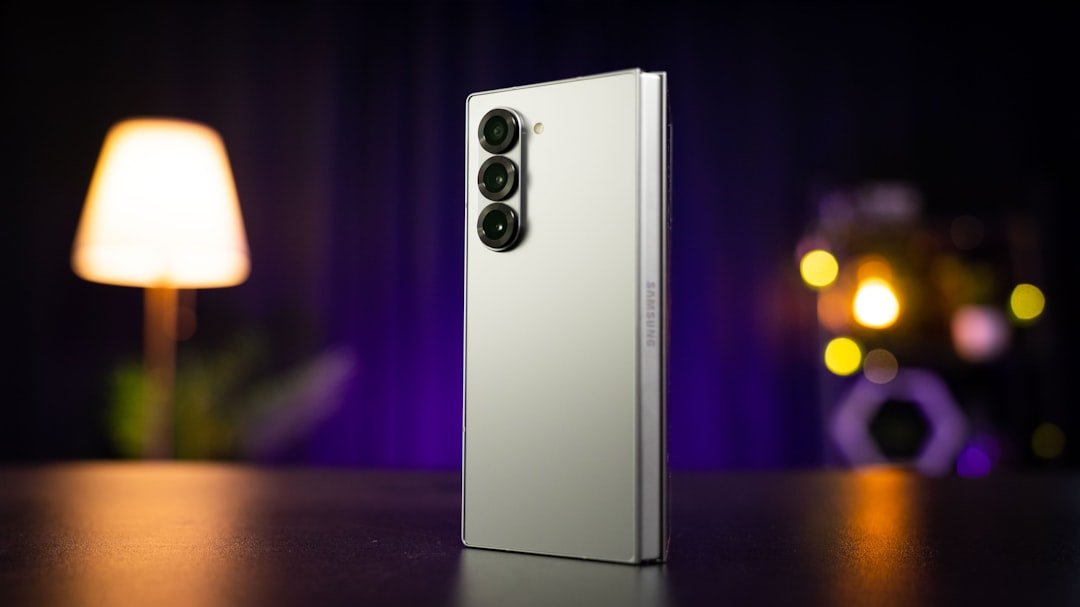
Data backs this: average screen sizes hit 6.7 inches, with foldables like Z Flip 7 (folded: 3.4 inches wide) offering dual-mode utility. Cover screens now run AI agents for quick tasks, reducing unfolds by 25%. Technically, ultra-thin glass (UTG) and hinge tech enable 200K+ folds, rivaling rigid devices in durability.
Industry-wide, Sony’s Xperia 10 VI clings to compactness, but volumes tank; Apple’s iPhone mini flopped. Samsung’s pivot accelerates foldable adoption—projected 15% of premiums by 2028—while funding crease-free Gen 4 hinges. Business angle: higher BOM costs yield 50% margins vs. midrange slabs.
For enterprises, larger canvases boost DeX multitasking; Z Flip’s outer display handles MFA logins securely. This strategy future-proofs against AR glasses, where pocketability reigns.
Samsung’s Interconnected Ecosystem: AI, Pricing, and Productivity Converge
Weaving these threads, Samsung forges an ecosystem where SDS’s AI backend powers consumer fronts. Price hikes offset R&D (DeX, foldables), while larger screens optimize AI interfaces—think multimodal LLMs on Tab S11 Ultra. Competitively, it challenges Google’s Pixel productivity suite and Apple’s Continuity, but with cloud-AI depth via SDS.
Broader ripples: Korea’s AI sovereignty strengthens against U.S.-China tensions, potentially exporting full-stack models. Enterprise adoption could spike hybrid cloud revenues 25%, per Gartner analogs.
As AI permeates every device, Samsung’s gambit raises pivotal questions: Will foldable premiums and DeX fluency convert skeptics into power users? Or will commoditization erode moats? With KKR’s war chest, Samsung isn’t just adapting—it’s rearchitecting mobile compute for an agentic era. Investors and IT leaders watch closely as these bets unfold across boardrooms and pockets alike.