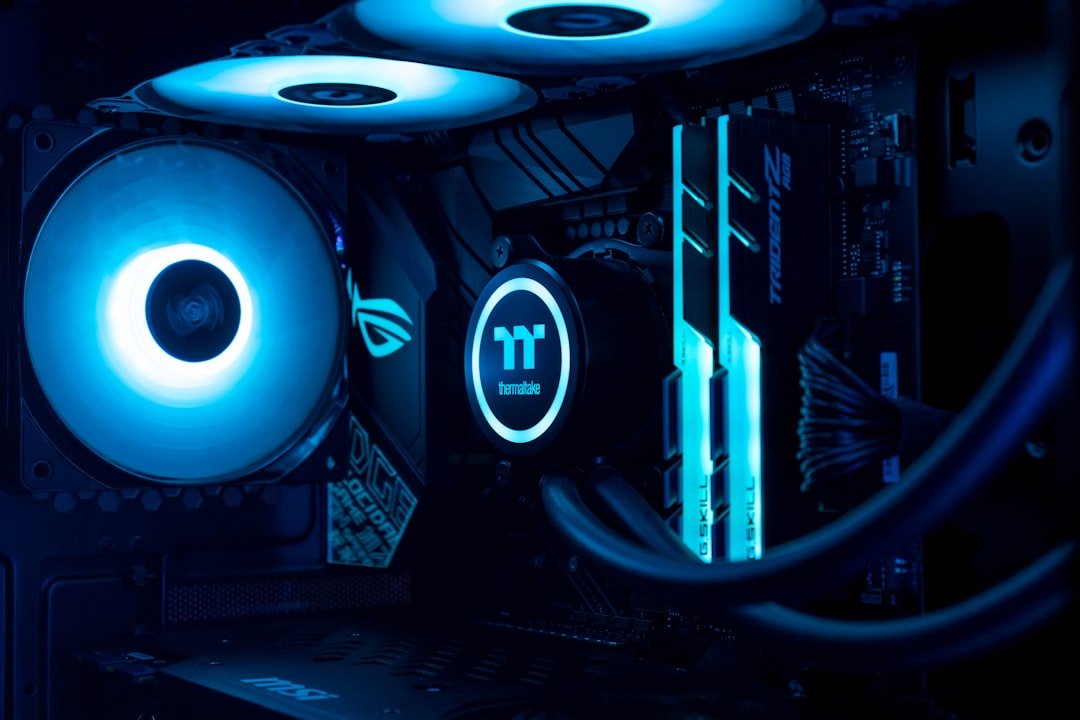
Nvidia’s Blackwell GPUs Shatter MLPerf Inference Records, Cementing AI Factory Dominance
In the latest MLPerf Inference v6.0 benchmarks, systems powered by Nvidia’s Blackwell Ultra GPUs delivered the highest throughput across the widest range of models and scenarios, including new tests like the DeepSeek-R1 Interactive workload with its 5x faster minimum token rate and 1.3x shorter time-to-first-token compared to server scenarios NVIDIA platform sets MLPerf records. This marks Nvidia’s 291st cumulative win since 2018—9x more than all competitors combined—highlighting not just hardware prowess but a full-stack co-design of chips, software like CUDA and TensorRT, and optimized models.
These results arrive as AI shifts from training hype to inference reality, where real-world token output determines revenue for enterprise “AI factories.” For cloud providers and enterprises building inference-heavy workloads—think agentic AI agents handling customer service or supply chain optimization—this supremacy means lower token costs and higher throughput, directly translating to scalable profitability. Nvidia’s edge, bolstered by 14 partners including CoreWeave, Cisco, and Google Cloud, underscores its moat in the inference era, where inference demand is exploding as models move to production.
Yet this technical triumph coincides with strategic maneuvers and market jitters, painting a picture of Nvidia fortifying its empire amid stock weakness and emerging bottlenecks. From embracing custom silicon rivals to fueling memory suppliers, Nvidia’s moves reveal a maturing AI ecosystem poised for enterprise ubiquity.
Blackwell’s Benchmark Blitz Signals Inference’s Revenue Gold Rush
Nvidia’s MLPerf dominance isn’t mere bragging rights; it’s a quantifiable proof point for the inference phase that’s set to dwarf training capex. The benchmarks tested diverse architectures, from sparse mixture-of-experts (MoE) like DeepSeek-R1 to interactive deployments mimicking high-stakes enterprise use cases. Only Nvidia submitted on all new scenarios, with Blackwell Ultra enabling the lowest token costs—critical as AI factories prioritize throughput per dollar spent.
This performance stems from “extreme co-design,” integrating hardware like Blackwell’s next-gen tensor cores with software stacks such as NIM microservices. For enterprises, this flywheel effect is transformative: greater inference capacity accelerates AI development, demanding more infrastructure in a capex supercycle projected through 2030. Partnerships with hyperscalers like Nebius and CoreWeave position Nvidia to capture recurring revenue from optimized ecosystems, evolving from cyclical GPU sales to sticky software licensing Nvidia’s 5-year stock outlook.
Industry implications ripple outward. Competitors like AMD or custom ASICs from Broadcom struggle to match this ecosystem lock-in, where CUDA’s maturity gives Nvidia a 10-20x developer advantage. As agentic AI—autonomous systems reasoning across tasks—enters production, enterprises face a “machine-speed cyberwar” per analysts, amplifying demand for Nvidia’s inference prowess Analyst calls on Nvidia. The result? AI infrastructure becomes less about raw flops and more about end-to-end efficiency, where Nvidia’s 71% gross margins shine.
Marvell Deal: Nvidia’s $2B Bet to Neutralize Custom Silicon Threat
Nvidia’s $2 billion stake in Marvell Technology, announced alongside a partnership for custom AI chips and networking integration, flips a potential existential risk into opportunity Nvidia-Marvell partnership details. Hyperscalers like Amazon, Microsoft, and Meta are pouring billions into ASICs via Marvell and Broadcom to diversify from Nvidia’s GPUs, which command premium pricing.
By opening NVLink Fusion—its proprietary high-speed interconnect—to non-Nvidia processors, Nvidia ensures compatibility across hybrid data centers. Marvell’s custom silicon now plugs into Nvidia’s networking fabric, CUDA software library, and full AI stack, letting Nvidia siphon value from rivals’ deployments. This “one-stop-shop” evolution addresses the custom chip threat head-on: while GPUs excel in versatile training/inference, ASICs optimize narrow workloads, but without Nvidia’s fabric, they isolate.
Business-wise, this cements Nvidia’s data center share as capex hits $700 billion in 2026. Shares jumped 5.6% post-announcement, signaling investor relief amid a stock down 20% from peaks. For enterprises, hybrid setups mean flexible scaling—Nvidia GPUs for general AI, Marvell ASICs for cost-sensitive inference—without vendor lock-in penalties. Long-term, it expands Nvidia’s total addressable market into custom silicon adjacencies, sustaining 30%+ growth even as GPU margins face pressure.
Enterprise AI Evolution: From Hardware to Full-Stack Solutions
Nvidia’s pivot to enterprise software, via Palantir partnerships and NIM services, transforms it from chip vendor to AI platform provider Enterprise AI catalysts. Fortune 500 firms are building proprietary systems blending Nvidia accelerated computing with analytics, yielding high-margin recurring revenue from licensing and inference-as-a-service.
This “sticky” model shifts AI from capex-heavy experiments to core processes like predictive maintenance or personalized marketing. Physical AI—robotics, autonomous vehicles—extends this, demanding inference at the edge. With CUDA and TensorRT enabling optimized deployments, Nvidia creates flywheels: more inference spurs infrastructure needs, looping back to its hardware.
Competitively, this outflanks pure-play software firms; enterprises gain turnkey ecosystems without in-house AI teams. Implications for cloud? Providers like CoreWeave thrive on Nvidia’s stack, but face dependency risks. As AI capex sustains through 2030, Nvidia’s software layer—absent in rivals—could double its revenue mix, mirroring enterprise software giants’ 80%+ margins.
Memory Crunch Propels Micron as AI’s Unsung Hero
As AI models balloon, high-bandwidth memory (HBM) emerges as the new bottleneck, catapulting Micron Technology whose shares surged 27% YTD and 309% over 12 months Micron’s AI tailwinds. GPUs and ASICs guzzle DRAM/NAND for vast data flows; Micron supplies this, complementing Nvidia’s compute focus.
Big tech’s $100B+ annual capex increasingly targets memory, shifting narratives from Nvidia/TSMC dominance. Micron’s HBM positions it for “supercycle” gains, akin to Nvidia’s 2023-2025 run. For enterprises, this means faster model training/inference as memory scales with compute, averting stalls in multimodal AI (vision+language).
Yet Micron isn’t “the new Nvidia”—it’s symbiotic. Bottlenecks amplify Nvidia’s urgency for full-stack integration, while Micron’s 20-30% market share in HBM cements supply chain interdependence. Future-proofing data centers now requires memory parity, potentially inflating AI costs 10-15% if shortages persist.
Stock Resilience: 20% Dips Herald New Highs in Nvidia’s History
Nvidia stock, down 20% from peaks and at its cheapest forward P/E (19.9x) in over a decade versus S&P’s 20.4x, echoes four prior AI-era corrections—each rebounding to all-time highs within six months Nvidia’s historical rebounds. Geopolitical tensions (Iran war) and AI spending fatigue drive the pullback, despite 71% FY2026 revenue growth forecasts.
Analysts like Oppenheimer reiterate Outperform, citing semis leadership Wall Street calls. Trading cheapest in 13 years underscores mispricing: $215B FY2026 revenue on Blackwell ramp belies risks 13-year valuation milestone. Enterprises benefit from discounted entry, but volatility tests conviction in sustained capex.
These threads—benchmark leadership, ecosystem expansion, memory synergies—weave a resilient fabric for AI’s enterprise ascent. As inference and physical AI proliferate, Nvidia’s full-stack moat positions it to harvest a $1T+ data center market by 2030, even amid custom silicon and supply shifts. The question lingers: will hyperscalers’ innovation accelerate this flywheel, or force Nvidia to redefine dominance yet again?
Leave a Reply