Samsung Biologics Seals Major U.S. Foothold with GSK Facility Acquisition
In a bold move to anchor its global biologics empire stateside, Samsung Biologics has finalized its purchase of GlaxoSmithKline’s (GSK) Rockville, Maryland manufacturing site, boosting its total drug substance capacity to 845,000 liters Samsung Biologics completes acquisition announcement. This 60,000-liter addition marks the contract development and manufacturing organization’s (CDMO) inaugural U.S. production hub, a strategic pivot amid escalating demands for resilient biopharma supply chains. With clinical and commercial-scale cGMP plants now under its wing, Samsung commits to ongoing GSK product supply while eyeing expansions to enhance tech upgrades and client services.
This acquisition transcends mere capacity grabs; it positions Samsung as a linchpin in North American biotech resilience, where geopolitical tensions and pandemics have exposed vulnerabilities in overseas manufacturing. CEO John Rim emphasized the site’s 500-strong workforce integration, underscoring how this diversification bolsters regional client support and mitigates risks like trade disruptions. For enterprises reliant on biologics—from monoclonal antibodies to gene therapies—this means faster timelines and reduced logistical chokepoints, potentially accelerating therapies to market.
As Samsung fortifies its industrial backbone, parallel advances in cybersecurity and health tech reveal a company threading enterprise-grade reliability across consumer and B2B frontiers, from secure data vaults to wearable diagnostics.
Knox Vault: Hardware-Isolated Fortress for Enterprise Data Protection
Samsung’s Knox Vault exemplifies defense-in-depth engineering, isolating sensitive credentials like encryption keys and biometrics in a tamper-proof hardware enclave separate from the Android OS Cyber science behind Knox Vault. Deployed across Galaxy Z Fold7, Flip7, and S25 series—managing over 150 million devices—Knox Vault employs a dedicated secure processor and memory to thwart both software exploits and physical attacks, such as chip-off forensics on stolen devices.
In enterprise contexts, where mobiles serve as endpoints for financial data and confidential comms, this isolation model outpaces software-only solutions vulnerable to OS compromises. By design, Knox Vault withstands advanced persistent threats (APTs), including side-channel attacks, ensuring data integrity even if malware infiltrates higher layers. This hardware-rooted approach aligns with zero-trust architectures, enabling IT admins to enforce granular policies via Knox Suite for device management.
Business implications ripple through cybersecurity landscapes dominated by rivals like Apple’s Secure Enclave. Samsung’s evolution from 2013 Knox inception to Vault’s maturity lowers breach costs—averaging $4.88 million per incident per IBM data—while supporting compliance like HIPAA or FedRAMP. As AI-driven attacks proliferate, Knox Vault’s physical attack resistance positions Samsung for enterprise wins, potentially capturing share from MDM providers like VMware or Microsoft Intune.
This security bedrock dovetails with Samsung’s health innovations, where trusted sensors demand unassailable data pipelines.
Galaxy Watches Gain Blood Pressure Monitoring, Elevating Enterprise Wellness
Samsung has rolled out blood pressure tracking to Galaxy Watch 4 and later models on Wear OS 4+, outpacing Apple by delivering systolic/diastolic readings via optical sensors calibrated against a cuff every 28 days Samsung blood pressure feature rollout. Free in the U.S. post-Samsung Health Monitor app download, it targets lifestyle insights—not diagnostics—ideal for under 120/80 mmHg baselines.
Technically, this leverages photoplethysmography (PPG) akin to pulse oximetry, cross-referenced with user baselines to estimate arterial pressure trends. For enterprises, it integrates into wellness programs, correlating stress metrics with productivity dips amid remote work’s mental health toll. Unlike Apple’s hypertension alerts, Samsung’s continuous monitoring enables proactive interventions, potentially slashing healthcare costs—U.S. firms spend $530 billion annually on employee health per Deloitte.
Competitively, this leapfrogs Whoop’s FDA-disputed insights, cementing Galaxy Watches in B2B healthtech. Paired with Knox Vault, it secures biometric data, fostering adoption in regulated sectors like finance or pharma. Future FDA nods could unlock clinical-grade status, mirroring Samsung’s biologics push for end-to-end health supply chains.
Shifting from wearables to audio, Samsung refines ecosystem cohesion with pro-grade earbuds tailored for Galaxy synergy.
Galaxy Buds 4 Pro: Audio Excellence Reinforces Device Ecosystem Lock-In
The Galaxy Buds 4 Pro earn accolades for stem-design comfort, IP57 durability, and intuitive squeeze-swipe controls, delivering superb sound optimized for Galaxy phones via a clamshell case Galaxy Buds 4 Pro review. Trading last year’s blade for a flat stem, they retain volume swipes and customizable ANC toggles, fitting hours-long wear despite looser seals.
For enterprise users, adaptive EQ and 360 Audio enhance virtual meetings, while Knox integration shields call data. At a premium price, they underscore Samsung’s ecosystem moat—seamless pairing with S25 series yields spatial audio unavailable on rivals like AirPods Pro. This lock-in boosts retention, critical as Android holds 70% global share per StatCounter.
Implications extend to hybrid work: dust/water resistance suits field ops, and Bixby customization streamlines workflows. Amid audio market saturation, Samsung’s Galaxy-exclusive features pressure Sony WF-1000XM5, potentially eroding Apple’s 50% U.S. earbud dominance.
These refinements parallel imaging tweaks, like custom camera filters on Galaxy phones, blending creativity with pro tools Custom camera filter guide.
Foldable Gambles and Flagship Leaks: Balancing Innovation with Profit Pressures
Samsung’s Galaxy Z Trifold launches at a $2,500 loss per unit in Korea, driven by AI-fueled RAM shortages, prioritizing market trials over margins Trifold loss report. VP Lim Sung-taek cited memory hikes, yet this “grand decision” echoes console strategies—subsidize hardware for ecosystem revenue.
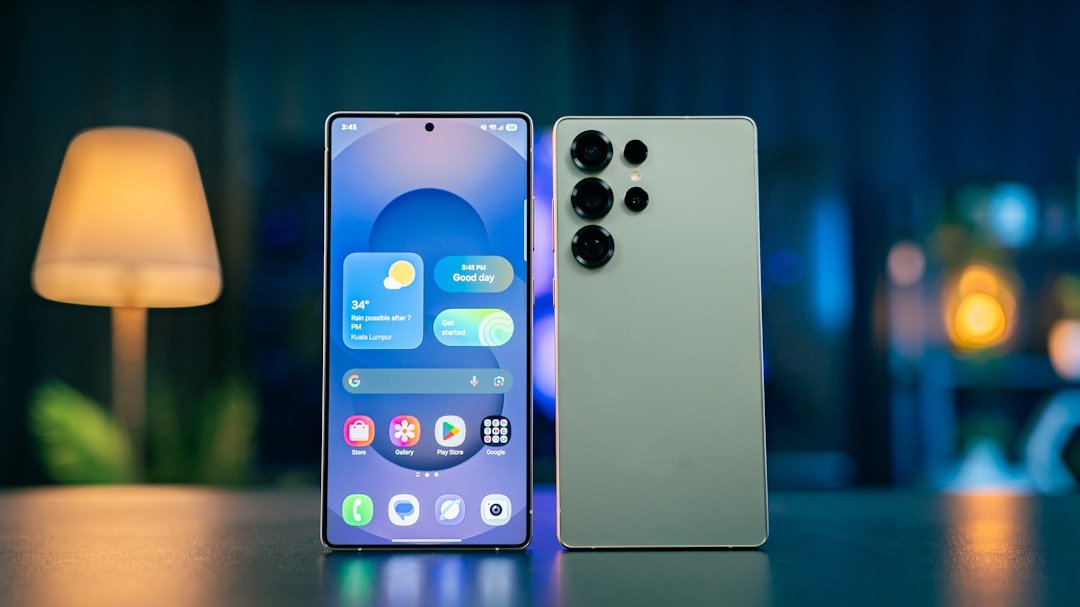
Simultaneously, Galaxy S26 leaks reveal conservative colors (Black, White, Silver Shadow, etc.) and Ultra pricing near $1,360, resisting chip inflation S26 leaks. This restraint signals maturity post-S25, amid foldable R&D burns.
For investors, Trifold risks highlight foldables’ 5-10% smartphone slice (IDC), but U.S. delays allow cost optimizations. Enterprise angle: Tri-fold form factors suit mobile productivity, secured by Knox. Big Spring Sale deals—S10 FE+ at $549.99, Frame Pro TV at $1,597.99, S95F OLED at $2,198—fuel volume Spring Sale deals; S95F deal.
These maneuvers reflect Samsung’s high-wire act: innovate amid shortages, leveraging deals for share gains.
Samsung’s sprawl—from Rockville’s cGMP lines to Knox-secured wearables—paints a portrait of a conglomerate rearchitecting tech’s fault lines. Biologics capacity shores pharma resilience, paralleling Knox Vault’s data silos against cyber threats and watch sensors’ wellness telemetry. Consumer volleys like Buds and deals mask foldable sacrifices, yet knit an ecosystem where enterprise security underwrites health and productivity tools.
Forward, U.S. manufacturing and health clearances could propel Samsung into trillion-dollar valuations, challenging TSMC in semis and Roche in CDMO. As AI strains supply chains, will Samsung’s diversified bets yield unbreakable resilience, or demand ruthless prioritization? The trajectory hints at dominance, if execution matches ambition.
(Word count: 1,248)
Leave a Reply