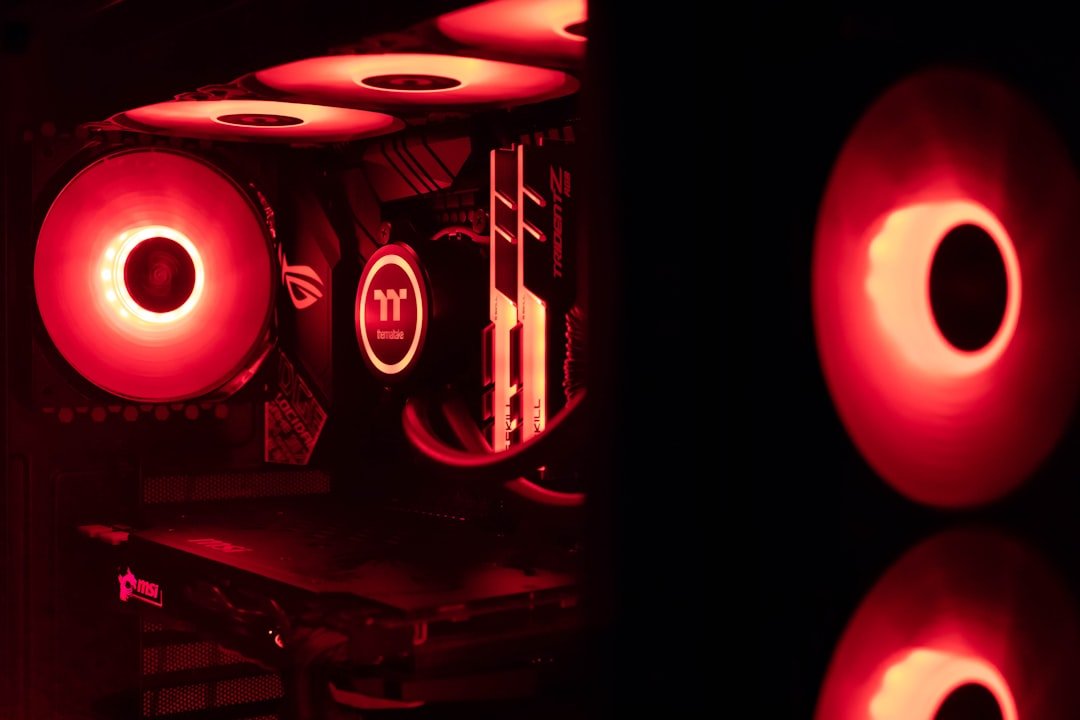

Nvidia’s DLSS 4.5 Redefines Gaming Fidelity, Leaving Native Resolution in the Dust
For gamers long wedded to the crisp purity of native resolution, a week-long experiment trading it for Nvidia’s latest DLSS 4.5 proved revelatory—and ultimately disappointing. XDA’s hands-on trial revealed that even in fast-paced multiplayer titles like Fortnite and Arc Raiders, DLSS Balanced mode delivered superior responsiveness and visuals, with frame generation and dynamic resolution scaling making it indispensable I went back to native resolution but Nvidia DLSS was still better. This isn’t mere upscaling; DLSS 4.5’s second-generation transformer model for Super Resolution, paired with Dynamic Multi Frame Generation and 6X Multi Frame Generation, pushes frame rates skyward while preserving detail that rivals or exceeds native rendering.
The implications ripple beyond personal rigs. With over 700 games now supporting DLSS technologies and 250+ embracing Multi Frame Generation, Nvidia has shifted the industry’s rendering paradigm. Path-traced games, once unplayable without it, now thrive, forcing developers to integrate via streamlined SDKs on platforms like Unreal Engine 5. This evolution—from DLSS 2’s “Vaseline” blur to a full-stack solution including ray reconstruction—cements Nvidia’s RTX ecosystem as the gold standard, potentially locking in consumer loyalty amid rising ray tracing demands Build AI-Powered Games with NVIDIA DLSS 4.5.
Physical AI Momentum Fuels Asian Supply Chain Rally
Nvidia’s venture into physical AI—encompassing robotics and embodied intelligence—has ignited a stock surge among Asian partners, underscoring the chipmaker’s deepening regional entrenchment. Shares of South Korea’s LG Electronics spiked 15% after reports of home robot integration with Nvidia platforms, while Taiwan’s Nanya Technology jumped 10% on collaboration news. Chinese firms like Huizhou Desay SV Automotive and Pateo Connect also rallied on intelligent driving solutions and product tie-ups Nvidia’s push into physical AI sparks rally.
Asian suppliers now claim 90% of Nvidia’s production costs, up from 65% last year, per Bloomberg data, as demand for AI chips, manufacturing, and assembly explodes. This shift extends beyond semiconductors to robotics, with partners like SK Hynix and Samsung scaling for physical AI workloads. Analysts like Union Bancaire Privee’s Vey-Sern Ling note that physical AI layers atop existing demand, amplifying supply chain reliance on Asia. For Nvidia, it diversifies revenue from data centers into edge applications, but heightens geopolitical risks amid U.S.-China tensions.
Enterprise adopters stand to gain from accelerated robotics deployment, where Nvidia’s platforms enable real-time inference. Yet, this ecosystem lock-in could pressure margins if partners demand more value-share, signaling a maturing AI hardware landscape where Nvidia orchestrates but doesn’t monopolize.
Developer Tools Empower AI Workflows Across Domains
Nvidia’s developer ecosystem is surging with GPU-accelerated tools tailored for creators and optimizers. ComfyUI workflows on RTX GPUs now enable production-grade tasks like image layer decomposition (foreground/midground/background with alpha masks), inpainting unwanted objects, and photo-to-3D model conversion in .GLB format—all locally, without cloud latency How to Build, Run, and Scale High-Quality Creator Workflows in ComfyUI. Requiring 24-48GB VRAM, these node-based pipelines compress hours of manual work into minutes.
In supply chains, cuOpt agent skills fuse LLMs with GPU solvers for natural-language optimization. Agents translate business queries into LP/MIP/routing models, solving multi-period planning in seconds—far outpacing CPU tools—via containerized deployments on Nvidia infrastructure Optimize Supply Chain Decision Systems Using NVIDIA cuOpt. TensorRT for RTX further accelerates Unreal Engine’s Neural Network Engine for AI rendering and animation.
These tools democratize AI, letting lean teams iterate rapidly. For industries like logistics and VFX, cuOpt’s agentic approach replaces weeks of operations research with dynamic, adaptive decisions, potentially slashing costs by orders of magnitude. Nvidia positions itself as the inference backbone, but success hinges on developer adoption amid open-source alternatives.
Transitioning from tools to markets, these innovations buoy Nvidia’s tech moat even as stock watchers grapple with external pressures.
China Market Lockout Exposes Geopolitical Vulnerabilities
Nvidia CEO Jensen Huang starkly declared the company’s China market share at “zero,” a plunge from 90% dominance, during a Special Competitive Studies Project interview. U.S. export curbs on high-end chips like the H200 have idled revenue streams, with fiscal 2026 China sales hitting $19.67 billion yet Q1 forecasts at nil Nvidia CEO Jensen Huang says company now has zero market share in China.
Huang argues the policy “backfired,” spurring domestic rivals like Huawei to build ecosystems challenging Nvidia globally. Nvidia’s 10-K warns of “material and adverse” impacts unless dual U.S.-China approvals resume. While Trump-era allowances loomed, no H200 shipments materialized, and skeptics fear military AI proliferation.
This void hands competitors a foothold in China’s vast data center market, eroding Nvidia’s 80-90% global GPU share. Strategically, it accelerates ASIC and custom silicon shifts, as inference workloads favor efficiency over Nvidia’s CUDA-optimized GPUs. Enterprises worldwide feel ripple effects: delayed AI rollouts in Asia, higher costs from smuggling (B300 servers now $1M), and a bifurcated global AI stack.
Hyperscaler Capex Boom Masks In-House Chip Rivalry
Major cloud providers’ earnings painted Nvidia as an indirect victor, with Amazon, Microsoft, Alphabet, and Meta projecting $500B+ in 2026-2027 AI capex—much on GPUs. Microsoft’s $190B forecast, Amazon’s $200B (already $43B YTD), and Alphabet’s acceleration underscore unrelenting demand Major Hyperscalers Just Reported Earnings. Nvidia Was The Winner.
Yet Nvidia stock dipped 4% post-earnings, as hyperscalers touted custom silicon: Amazon’s Trainium/Graviton, Google’s TPUs for external sales, Microsoft’s Maia 200 (30% better tokens/dollar). CEOs like Andy Jassy emphasized “choice,” with Nvidia as a partner but not sole supplier Nvidia tumbles after hyperscaler earnings. Qualcomm surged 14% on data center gains, while memory firms rose on buildout costs.
IO Fund trimmed Nvidia amid inference shift (ASIC servers to 27.8% of 2026 shipments per TrendForce) and Rubin GPU delays, spotting bull traps in semiconductor divergences Is Nvidia Stock a Buy?. Gross margins (70%) face pressure as hardware moats erode.
Nvidia’s CUDA software fortress buys time, but hyperscalers’ vertical integration—controlling 36% of Nvidia revenue—threatens pricing power. Investors weigh capex tailwinds against diversification risks.
Investor Caution Signals Potential Semiconductor Peak
Technical divergences amplify bearish signals: Nvidia leads SMH ETF highs since 2022’s AI surge, but broader semis lag, hinting at bull traps. With Rubin delayed and ASICs rising, premium pricing wanes.
These tensions converge in a pivotal moment for Nvidia. Technological prowess in DLSS, physical AI, and agentic tools fortifies its enterprise and consumer bases, enabling workflows from gaming to supply chains that rivals struggle to match. Yet, China exclusion, hyperscaler self-reliance, and inference economics erode the unassailable GPU dominance that fueled trillion-dollar valuations.
The broader semiconductor landscape fragments: custom ASICs optimize inference, robotics demand edge inference, and agent skills blend reasoning with optimization. Nvidia’s 90% Asian supply reliance amplifies resilience but vulnerability. Forward, Rubin Ultra and Blackwell ramps could reclaim momentum, but policy fluidity and TPU/Trainium scale will test adaptability. Will Nvidia evolve from GPU king to AI platform orchestrator, or yield ground in a multipolar hardware era? The coming quarters, with GTC announcements and Q2 earnings, hold the answer.