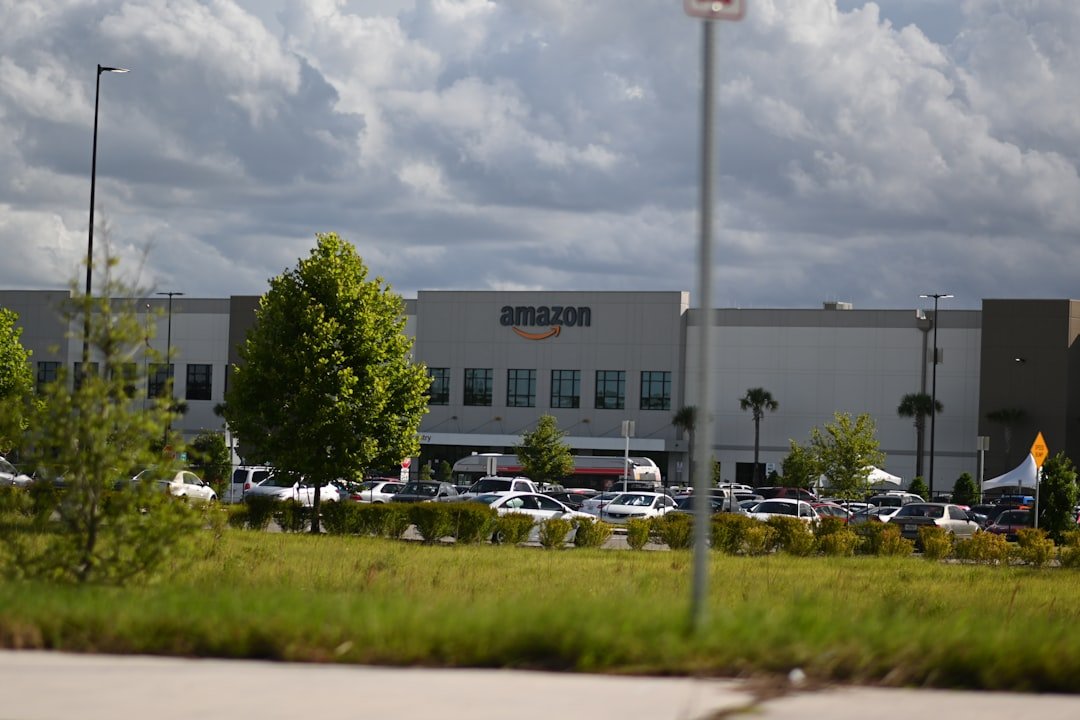

In a move that underscores the escalating stakes in the AI infrastructure race, Anthropic has pledged over $100 billion to Amazon Web Services (AWS) across the next decade, securing up to 5 gigawatts of AWS Trainium chips to fuel its Claude models Anthropic commits $100B to AWS. Amazon reciprocates with an immediate $5 billion investment—on top of $8 billion already committed—positioning AWS as the backbone for one of the world’s most valuable private AI firms, now valued at $380 billion. This pact arrives amid Anthropic’s public standoff with the U.S. government over military AI restrictions, highlighting tensions between commercial innovation and national security.
These commitments reflect a broader surge in AI-driven cloud demand, where custom silicon and massive scale are no longer luxuries but necessities for agentic systems—AI that reasons, plans, and executes autonomously. Meta’s parallel announcement to integrate tens of millions of AWS Graviton cores into its portfolio amplifies this trend, marking it as one of the largest Graviton adopters globally Meta partners with AWS on Graviton. As enterprises grapple with exploding compute needs, AWS’s ecosystem innovations—from silicon partnerships to automation tools—signal a maturing platform poised to capture the trillion-dollar AI economy. This article dissects these developments across infrastructure scaling, AI enablement, operational automation, workflow modernization, and security hardening.
Hyperscale AI Pacts Signal Shift to Custom Silicon Dominance
Anthropic’s $100 billion multiyear commitment to AWS eclipses prior deals, granting priority access to Trainium chips optimized for training at hyperscale while embedding Claude directly into the AWS console for 100,000 existing customers. Amazon CEO Andy Jassy emphasized the cost edge: “Our custom AI silicon offers high performance at significantly lower cost,” a direct jab at GPU shortages plaguing rivals like Nvidia-dependent providers. This builds on a 2023 partnership, now supercharged amid Anthropic’s rivalry with OpenAI ($500 billion valuation) and xAI-SpaceX integrations.
Meta’s deal complements this, deploying “tens of millions” of Graviton5 cores for CPU-intensive agentic AI workloads, which demand faster data processing and bandwidth for continuous reasoning. Meta’s Santosh Janardhan, Head of Infrastructure, called diversification a “strategic imperative,” blending in-house data centers with AWS’s differentiated silicon. AWS VP Nafea Bshara hailed it as combining “purpose-built silicon with the full AWS AI stack” to scale to billions of users.
Industry implications are profound: Custom ASICs like Graviton and Trainium erode Nvidia’s GPU monopoly, slashing costs by 40-50% for inference-heavy tasks per AWS benchmarks. For enterprises, this democratizes agentic AI, but intensifies lock-in risks—Anthropic’s scale could pressure smaller players into AWS orbits. As AI capex surges past $200 billion annually (Goldman Sachs estimates), these pacts fortify AWS’s 31% cloud market share against Azure and Google Cloud, potentially accelerating a silicon arms race.
Persistent Memory Fuels Context-Aware Enterprise AI
Agentic AI thrives on memory, and AWS is embedding company-specific persistence via Amazon Bedrock integrations. Trend Micro’s deployment exemplifies this: Using Amazon Neptune for knowledge graphs and Mem0 for hybrid short/long-term memory, their Trend’s Companion chatbot retains organizational context across sessions, extracting entities from Claude models and embedding via Titan Text Company-wise memory in Bedrock.
Neptune stores relational data—like processes and hierarchies—for precise retrieval, while Mem0 handles conversational continuity, queried during Bedrock inference. This addresses a core enterprise pain: generic LLMs forgetting company nuance, leading to 30-50% lower satisfaction in pilots (Gartner). Trend Micro’s setup with OpenSearch for vector search ensures secure, updatable knowledge, scaling to thousands of interactions.
Technically, graph databases like Neptune excel here, offering O(1) relationship queries versus vector stores’ approximations. Business-wise, it enables “context-aware support,” boosting CSAT by retaining history without retraining models. As agentic systems proliferate—projected to underpin 70% of enterprise apps by 2028 (IDC)—this positions Bedrock as a leader in RAG-plus-memory architectures, outpacing Azure’s offerings and pressuring on-prem alternatives.
Automation Accelerates Incident Response and ML Modernization
Behind AI’s glamour lies operational drudgery, which AWS tools automate ruthlessly. The AWS DevOps Agent exemplifies this for networks: Triggered by CloudWatch alarms, it correlates metrics, logs, VPC flows, and API changes to diagnose issues like Transit Gateway misroutes in minutes, not hours—covering security groups, NAT gateways, and multi-account failures Automated network incident response. A simulated Node.js app on EC2/ALB demos four scenarios, with GitHub templates for replication.
Complementing this, Impetus LeapLogic automates legacy ML migrations to SageMaker, transforming pipelines with minimal refactoring, while AWS Transform custom’s “Learn-Scale-Improve” flywheel cuts enterprise modernization from 7-12 weeks to 2.5 via bulk repo analysis LeapLogic to SageMaker; Transform custom flywheel. One customer achieved 3-5x faster delivery, addressing the “70% coordination gap” beyond code transforms.
These reduce MTTR by 80% and migration risks, vital as 60% of firms stall on ML ops (Forrester). By standardizing on SageMaker’s end-to-end lifecycle—training, versioning, monitoring—enterprises unlock ROI, transitioning from siloed on-prem to governed cloud AI factories.
Cloud-Native Workbenches Reshape Engineering Velocity
Software-defined everything demands reproducible environments, and the open-source Virtual Engineering Workbench (VEW) delivers via AWS serverless. A self-service portal on CDK, it provisions toolchains, simulators, and hardware models for automotive/embedded teams—eliminating days-long setups Virtual Engineering Workbench. Deployed in 60 minutes, its hexagonal architecture segments projects, packaging, and provisioning across API Gateway, Lambda, DynamoDB, and EventBridge.
Used by Stellantis and Schaeffler for AUTOSAR and RISC-V prototyping, VEW’s public/private modes support hybrid workflows. React frontend via CloudFront ensures consistency, curbing config drift plaguing 70% of dev teams (DORA).
For industries like manufacturing, where vehicles morph into software platforms, VEW accelerates delivery 2-3x by centralizing validation infra. It bridges devops gaps, aligning with SageMaker migrations for ML-infused engineering—portending a future where cloud workbenches standardize innovation at global scale.
Native Networking and AI-Driven Security Bolster Resilience
Networking evolves with AWS Client VPN’s native Transit Gateway attachment, ditching VPC hosting for direct hubs connecting remote users to VPCs/on-prem without SNAT—preserving client IPs for visibility Client VPN Transit Gateway. This simplifies scaling, enhances auditing, and segments traffic natively.
Security layers up via IBM Concert/Instana on AWS: Integrating Amazon Inspector scans with AI prioritization and Instana’s observability, it triages EKS/ROSA/EC2 vulns by impact, automating workflows Vulnerability Management with IBM. Concert ingests Kubernetes metadata, correlating with traces for business-context remediation.
These fortify AI infra: No-SNAT VPN aids zero-trust, while prioritized vulns cut breach windows from weeks to days. Amid rising attacks (up 75% YoY, Verizon DBIR), they enable resilient, observable enterprises.
These threads weave a tapestry of AWS dominance: AI-fueled hyperscale, automated ops, and ironclad security form a flywheel propelling enterprises toward autonomous cloud futures. As custom silicon proliferates and agentic workloads demand flawless infrastructure, AWS’s integrations lower barriers while raising the floor for competitors. What emerges is not just a cloud provider, but an AI operating system—poised to redefine how billions interact with intelligent systems. The question lingers: Can rivals match this breadth before AWS cements its lead?