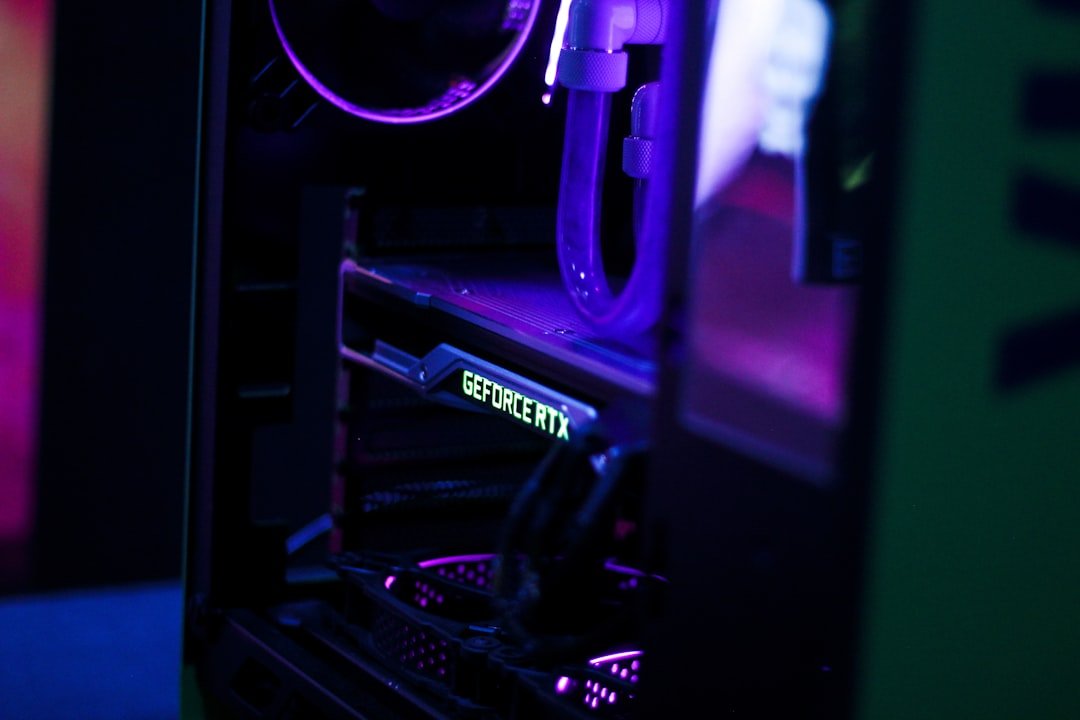

Nvidia’s ascent to a $5 trillion market capitalization marks a watershed moment for the semiconductor industry, underscoring the unrelenting demand for AI infrastructure. Shares surged 4.3% to close at $208.27 on Friday, the first record high since October, propelled by investor enthusiasm ahead of hyperscaler earnings and a broader chip sector rally triggered by Intel’s surprise beat Nvidia stock closes at record, pushing market cap past $5 trillion. This milestone isn’t mere speculation; it’s a validation of Nvidia’s graphics processing units (GPUs) as the indispensable backbone for AI models from OpenAI, Anthropic, Google, Microsoft, Meta, and Amazon. With the Nasdaq up 15% in April—its strongest month since 2020—the rally signals AI’s spillover into CPUs and other silicon, broadening the “AI trade” beyond Nvidia’s dominance.
These developments ripple across enterprise technology, from workforce transformation to energy constraints and cutting-edge model deployments. Nvidia’s ecosystem is evolving not just as a hardware provider but as an orchestrator of AI’s next phase, addressing scalability, power, and productivity challenges head-on. As competition intensifies—Alphabet’s custom chips loom large—the company’s strategic maneuvers position it at the nexus of AI’s exponential growth.
Stock Surge Signals Broadening AI Hardware Demand
Nvidia’s record close capped a 14-fold gain since late 2022, fueled by AI’s insatiable appetite for compute Nvidia stock closes at record, pushing market cap past $5 trillion. Intel’s late-Thursday earnings ignited the fire: a 24% share spike—its best since 1987—on 22% data center growth, hinting at AI demand finally lifting legacy players through advanced packaging and CPUs Why Is Nvidia (NVDA) Stock Soaring Today. AMD jumped 14%, Qualcomm 11%, reflecting a sector consensus that AI infrastructure spend is diversifying.
This isn’t isolated euphoria. Omdia’s upgraded 2026 semiconductor forecast cites surging memory and storage needs for AI workloads, easing prior pullbacks from oil shocks and supply disruptions. For Nvidia, it reinforces pricing power amid Blackwell GPU ramps, but risks loom: hyperscalers like Alphabet are developing in-house alternatives, potentially capping GPU reliance long-term. Business implications are profound—Nvidia’s $5T valuation (rivaling Apple and Microsoft) demands sustained 100%+ revenue growth, yet broadening demand could stabilize the ecosystem, reducing single-vendor risk for cloud giants.
Huang’s Mantra: AI Empowers Workers, Doesn’t Erase Them
Nvidia CEO Jensen Huang reframes AI’s labor impact with stark clarity: “It is unlikely most people will lose a job to AI. It is most likely that most people will lose their job to somebody who uses AI” Nvidia CEO Jensen Huang says you won’t lose your job to AI—you’ll lose it to your coworker who uses it. Speaking at Stanford alongside Rep. Ro Khanna, Huang urges universal adoption, contrasting doomsayers like Anthropic’s Dario Amodei, who predicts half of entry-level white-collar jobs vanishing.
Data backs his optimism. Writer’s report shows AI users three times more likely to earn promotions, with 60% of executives eyeing cuts for non-adopters; KPMG notes 40% worker fears, and 29% sabotage efforts. Huang envisions 100 AI agents per human, potentially reinserting 40 million into the workforce via productivity gains. For enterprises, this shifts AI from threat to mandate—cybersecurity teams using AI for threat hunting could outpace manual analysts, while cloud ops leverage agents for orchestration. Nvidia’s internal push, with 10,000+ employees on OpenAI’s GPT-5.5-powered Codex, yields “mind-blowing” results: days-long debugging slashed to hours on GB200 NVL72 systems OpenAI’s New GPT-5.5 Powers Codex on NVIDIA Infrastructure.
Nuclear Power as AI’s Energy Lifeline
AI’s power hunger—data centers rivaling small countries—demands radical solutions, and Nvidia is deploying the “nuclear option” via a partnership with Oklo and Los Alamos National Laboratory (LANL) Nvidia Just Deployed the Nuclear Option. The trio targets physics-based AI models for nuclear fuel validation, plutonium fuels, and grid-stabilized “AI factories,” blending digital twins and inference on Nvidia GPUs.
Oklo’s Meta deal for a 1.2GW Ohio campus underscores urgency; Bank of America pegs nuclear as a $10T opportunity amid renewables’ limits. Nvidia’s GPUs, powering 90%+ of AI training, exacerbate this: a single GB200 rack draws megawatts. Technically, AI-accelerated simulations cut fuel certification timelines, enabling small modular reactors (SMRs) for hyperscale needs. Implications? It future-proofs Nvidia’s moat—energy abundance sustains GPU clusters, countering efficiency plays from rivals. Enterprises face blackouts without it; cloud providers like AWS and Azure could pivot to nuclear-backed colos, slashing carbon footprints while scaling AI.
Frontier Models Turbocharged on Blackwell Platforms
Nvidia’s hardware cements its lead in frontier AI. OpenAI’s GPT-5.5 drives Codex, an agentic coding app, on GB200 NVL72 racks—delivering 35x lower cost per million tokens and 50x throughput per megawatt versus priors OpenAI’s New GPT-5.5 Powers Codex on NVIDIA Infrastructure. Secure SSH to enterprise VMs ensures auditability, with Nvidia’s 10,000 users shipping features from prompts.
DeepSeek V4 amplifies this: 1.6T-parameter Pro and 284B Flash models hit 1M-token contexts on Blackwell GPUs, slashing KV cache by 90% via hybrid attention (CSA, DSA, HCA) Build with DeepSeek V4 Using NVIDIA Blackwell. Long-context agents thrive for coding and retrieval. For cybersecurity, this means real-time threat analysis over vast logs; in cloud, multi-step orchestration without context collapse. Nvidia’s NVLink Fusion and photonics investments broaden compatibility, pressuring AMD’s MI300X while locking in ecosystem stickiness.
Ecosystem Expansion: Gaming, Science, and Beyond
Nvidia’s tentacles extend to consumer and scientific realms. Marvel Rivals Season 7.5 integrates DLSS Multi Frame Generation (up to 6X), boosting frame rates with path tracing Marvel Rivals GeForce Reward & Season 7.5 Available Now. Titles like PRAGMATA and NTE leverage DLSS 4.5 for ray-traced fidelity, sustaining GeForce revenue amid AI shifts.
In astrophysics, UC Santa Cruz’s Brant Robertson harnesses GPUs to sift JWST’s terabyte deep fields, revealing unexpectedly abundant early galaxies Making Sense of the Early Universe. AI models resolve 13B-year-old light, compressing analysis from years to days. This versatility—enterprise AI to exascale science—diversifies Nvidia’s addressable market, with CUDA’s maturity outpacing open-source challengers like ROCm.
These threads weave a tapestry of AI ubiquity, where Nvidia isn’t just selling chips but enabling an intelligence explosion. Enterprises must grapple with workforce upskilling, nuclear-scale power deals, and agentic workflows, as AI permeates clouds, edges, and beyond. With Blackwell deployments accelerating and custom silicon threats mounting, Nvidia’s trajectory hinges on execution—can it sustain 200% CAGR while competitors erode margins? The $5T giant’s next act will redefine tech’s power dynamics, challenging leaders to harness AI’s promise before peers do.