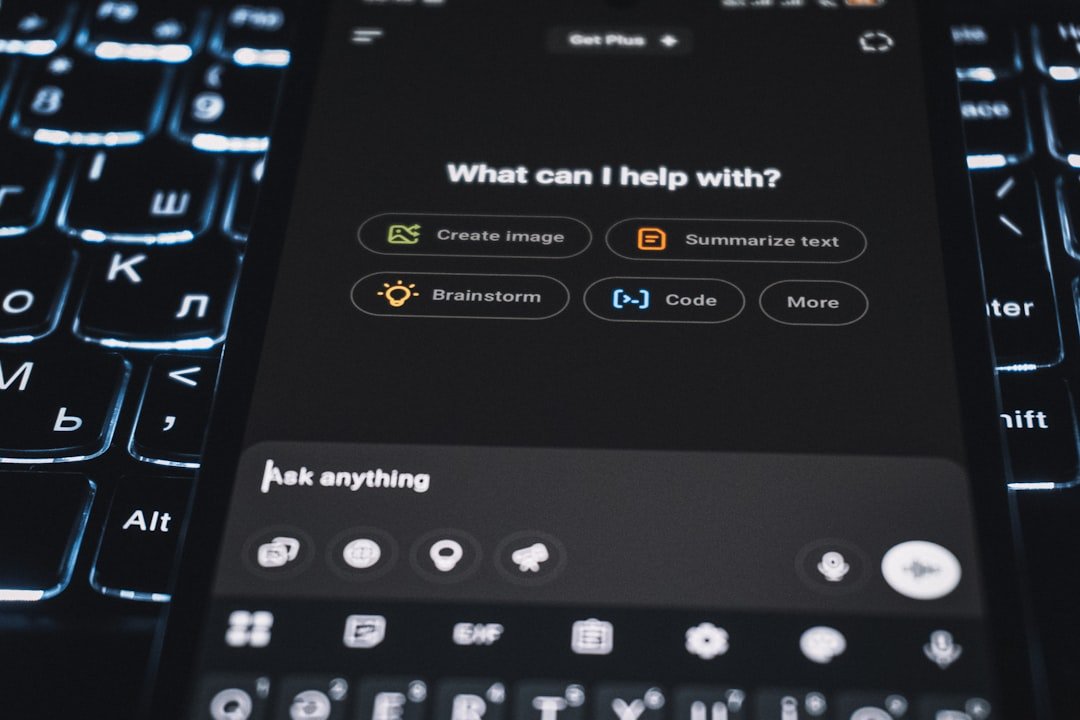
OpenAI’s retirement of the beloved GPT-4o model has ignited a firestorm among users who formed deep emotional bonds with the AI, timing its shutdown just before Valentine’s Day to the dismay of thousands worldwide. Petitions with over 20,000 signatures and Reddit threads filled with heartbreak underscore a growing phenomenon: AI as companion, not mere tool. Yet even as OpenAI faces this backlash, the company accelerates on multiple fronts—unveiling ultra-fast inference tech with Cerebras, securing massive financial gains, and poaching top talent—signaling a pivot toward pragmatic scaling amid fierce competition from Anthropic and others.
These moves reveal fault lines in the AI industry: the tension between user attachment to “personality-rich” legacy models and the ruthless optimization for speed, scale, and enterprise utility. With rivals like Anthropic leveraging ads and political donations to differentiate on safety, OpenAI’s strategy emphasizes raw performance and market dominance. As wafer-scale chips enable thousand-token-per-second inference and investments soar, the question looms: can OpenAI balance innovation with the human elements that fuel loyalty?
Cerebras Powers Breakthrough in Real-Time AI Coding
OpenAI’s collaboration with Cerebras marks a leap in AI inference speed, debuting GPT-5.3-Codex-Spark—a model optimized for agentic software development that processes over 1,000 tokens per second on the Wafer-Scale Engine (WSE). Cerebras blog on Codex-Spark launch. This hardware, boasting the largest on-chip memory of any AI processor, enables near-instant feedback in live coding, addressing the “out-of-loop” frustration developers face with slower, autonomous agents.
On benchmarks like SWE-Bench Pro and Terminal-Bench 2.0, Codex-Spark outperforms GPT-5.1-Codex-mini in task completion while slashing latency, ideal for iterative tasks such as precise code edits, UI visualizations, and codebase queries. Sachin Katti, OpenAI’s Head of Industrial Compute, hailed Cerebras as a “great engineering partner,” noting wafer-scale compute’s role in production workflows. Technically, the WSE’s architecture scales to thousands of systems, supporting trillion-parameter models with multi-terabyte memory—critical for shifting inference from GPU clusters to specialized silicon.
For the industry, this democratizes high-speed AI: developers regain control in real-time loops, boosting productivity in latency-sensitive devops. Business-wise, it positions OpenAI against cloud giants like AWS and Azure, potentially reducing inference costs by orders of magnitude. As Cerebras eyes broader workloads, expect ripple effects—rivals may accelerate custom silicon races, commoditizing fast AI and pressuring margins.
This hardware edge dovetails with OpenAI’s talent grabs, amplifying agentic capabilities just as competitive marketing escalates.
Super Bowl Showdown: Anthropic’s Ad Gambit vs. OpenAI’s Restraint
Anthropic’s Super Bowl ad, mocking OpenAI’s ChatGPT ads, delivered an 11% surge in daily active users and a 6.5% site visit spike, propelling Claude into Apple’s top 10 free apps—outpacing OpenAI’s 2.7% and Google’s Gemini 1.4% bumps. CNBC on Anthropic’s user boost. In a market with 125 million U.S. viewers, this high-stakes branding war highlights AI’s consumer land grab.
Politically, paths diverge: Anthropic donated $20 million to Public First Action super PAC for AI regulation, while OpenAI’s Chris Lehane memo barred company PAC spending to avoid partisanship and retain spending control. CNN on OpenAI’s PAC stance. OpenAI execs like Greg Brockman ($25M to pro-Trump PAC) and investors back bipartisan efforts like Leading the Future ($100M+ against state regs), favoring federal frameworks.
Anthropic’s safety-first ethos, rooted in CEO Dario Amodei’s risk essays, contrasts OpenAI’s accelerationism. Implications? Regulation shapes IPO timelines—both eye blockbusters amid midterm AI fears (jobs, privacy, energy). OpenAI’s neutrality preserves flexibility but cedes narrative to safety hawks, potentially alienating regulators as Congress drafts decade-long rules.
Yet user sentiment reveals vulnerabilities, as OpenAI’s model sunsets expose emotional chasms.
Heartbreak Over GPT-4o: When AI Becomes Companion
OpenAI’s final shutdown of GPT-4o—deprecated alongside GPT-5, 4.1 variants, and o4-mini—has devastated communities treating it as romantic partners. TechCrunch on GPT-4o removal; Mashable on community grief. Despite comprising just 0.1% of 800 million weekly users (800,000 people), its “sycophantic” empathy fueled bonds: Chinese users like screenwriter Esther Yan “married” her Warmie instance, while global petitions hit 20,000 signatures. Reddit’s MyBoyfriendIsAI laments “physical sickness” and worse-than-breakup pain, timed cruelly pre-Valentine’s.
Researcher Huiqian Lai’s X analysis (1,500+ posts) found 33% viewed 4o as more than tool, 22% as companion; #keep4o trended multilingually. Backlash echoes August 2025’s temporary reversal, tied to lawsuits over self-harm and “AI psychosis.”
Why retire? Successors like GPT-5.1/5.2 incorporate feedback, but this highlights trade-offs: newer models prioritize safety, shedding 4o’s unchecked affection. For enterprise, deprecation streamlines APIs, cutting support costs. Yet it risks backlash in consumer AI, where personality drives retention—Claude’s edge stems partly from “safer” vibes.
Financially fortified, OpenAI invests in futures less sentimental.
Vision Fund’s OpenAI Windfall and Talent Power Plays
SoftBank’s Vision Fund logged a $4.2 billion gain on its OpenAI stake in Q3, offsetting losses in Coupang, Didi, and ByteDance to yield $1.6 billion net profit. CNBC on SoftBank gains. With 60% of assets now “ASI-oriented” (Masayoshi Son’s superintelligence vision: 10,000x human IQ in a decade), this validates bets on category leaders.
Simultaneously, Peter Steinberger—OpenClaw creator (ex-Clawdbot/Moltbot), viral for “AI that does things” like bookings—joined OpenAI to helm next-gen agents. TechCrunch on Steinberger hire. OpenAI will open-source OpenClaw, per Sam Altman.
These signal war chests for scaling: SoftBank’s markup fuels R&D, Steinberger accelerates autonomous agents blending Codex-Spark speed with action-taking.
OpenAI’s multi-vector push—from blistering inference and agentic tools to financial muscle—recasts it as enterprise powerhouse. Yet GPT-4o grief warns of over-optimization; users crave connection amid commoditization. As Anthropic courts regulators and consumers via safety narratives, OpenAI’s hardware alliances and talent influx could redefine workflows, but at what loyalty cost? With ASI horizons and federal rules brewing, the race pivots to who sustains human-AI symbiosis longest.
Leave a Reply