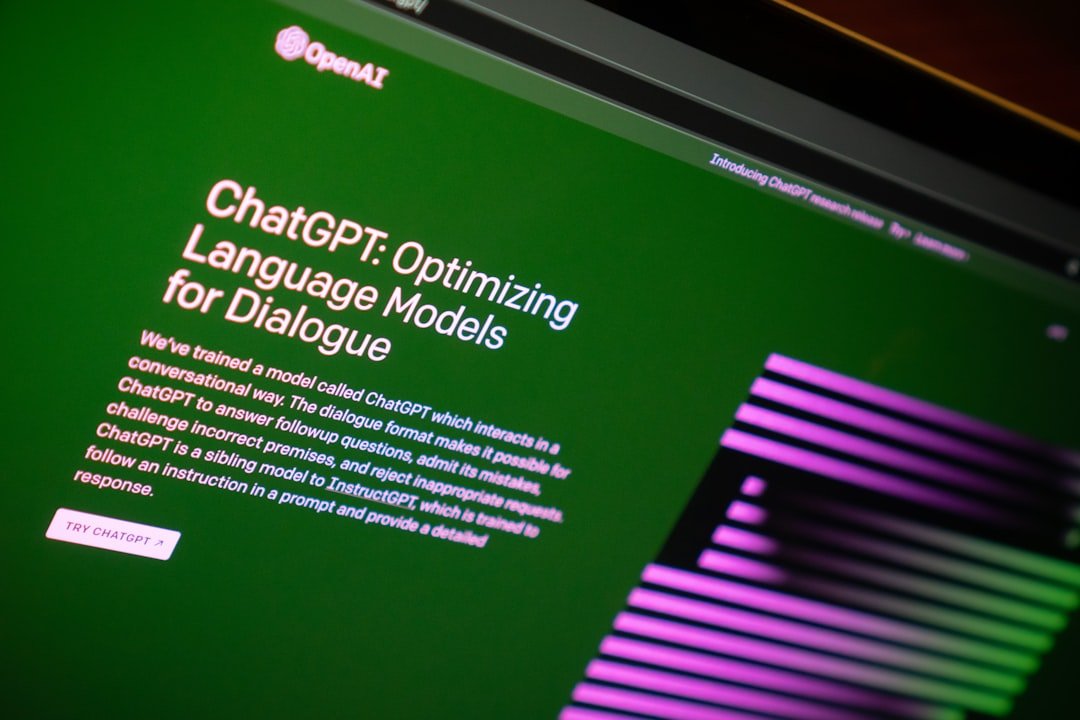
OpenAI’s colossal $122 billion funding round, closed at an eye-watering $852 billion post-money valuation, marks the largest capital raise in Silicon Valley history, injecting unprecedented resources into the AI leader just as it braces for a potential IPO. Co-led by SoftBank with participation from Andreessen Horowitz, D.E. Shaw Ventures, and strategic giants like Microsoft, Nvidia, and Amazon, this infusion—up from $110 billion announced earlier—positions OpenAI as the world’s second-most valuable private company, trailing only SpaceX at $1.45 trillion OpenAI’s valuation trajectory from $28B in 2023. Yet this triumph unfolds against a backdrop of ruthless cost discipline: the shutdown of its Sora video app, shelving of a controversial “adult mode” for ChatGPT, and a broader “Code Red” pivot to core products.
These moves reveal a company at a crossroads, where explosive growth in ChatGPT’s 900 million weekly users and 50 million subscribers collides with compute-hungry realities and intensifying competition. OpenAI’s leadership, under CEO Sam Altman, is wagering that laser-focused execution on enterprise tools like Codex and the agentic browser Atlas will justify the valuation, while robotics expansions and nascent ad experiments hint at diversification. As investors eye profitability ahead of public markets, the stakes extend beyond OpenAI to the AI industry’s sustainability model.
Funding Feat Cements Dominance, But Pressures Mount for ROI
OpenAI’s latest round not only shattered records but vaulted its valuation from $500 billion in October 2025 to $852 billion in a mere six months, making it—if public—the 11th-largest S&P 500 company by market cap OpenAI funding details and investor lineup. DA Davidson analyst Gil Luria hailed it as validation of OpenAI’s “fake it till you make it” strategy, now emphatically realized through ChatGPT’s ubiquity. The capital targets a “unified AI superapp,” promising to amplify productivity in scientific discovery and enterprise workflows.
For the industry, this underscores investor appetite for AI despite ballooning losses; OpenAI’s cash burn remains prodigious, with infrastructure alone eyed at $600 billion through the decade after halving prior $1.4 trillion plans. Technically, the funds will bolster GPU access critical for training frontier models, where compute scarcity defines competitive edges—Nvidia’s ecosystem locks in dependencies. Business-wise, it signals confidence in monetization via subscriptions and APIs, but Altman’s IPO timeline demands path-to-profitability proofs. Rivals like Anthropic, valued lower but gaining enterprise traction, highlight the risk: without returns, this valuation could evaporate in public scrutiny, reshaping VC dynamics for AI unicorns.
Transitioning from financial firepower, OpenAI’s internal reckoning exposes vulnerabilities in peripheral bets.
Sora’s Demise and Adult Mode Shelved: Prioritizing Compute Over Experiments
In a stunning reversal, OpenAI axed its Sora video-generation app—launched just six months prior—after it hemorrhaged $1 million daily on compute for a user base that peaked at one million before plummeting below 500,000 Sora shutdown economics and competitive lag. Disney, committed to a $1 billion partnership, learned of the cancellation less than an hour before public announcement, underscoring the abruptness. Days earlier, the firm indefinitely paused “adult mode” for ChatGPT, a text-based erotic chatbot nixed amid safety fears over minors’ access, exploitative content risks, and training hurdles Adult mode cancellation and internal concerns.
This “Code Red” purge, declared by Altman in December 2025, redirects resources to core pillars: ChatGPT, Codex for coding, and Atlas browser Strategic refocus post-code red. Video generation’s inference costs—tied to diffusion models devouring H100 GPUs—exemplify AI’s compute bottleneck; Sora trailed rivals like Google’s Veo or Kling in quality, per Render Network benchmarks. Implications ripple enterprise-wide: firms chasing multimodal AI must weigh moonshots against margins, as OpenAI’s retreat validates hyperscalers’ focus on text-to-action agents. For cybersecurity, axing adult mode averts data poisoning risks in fine-tuning, but signals ethical guardrails tightening amid regulatory scrutiny.
Such discipline, however, stems from fiercer battlefield dynamics.
Competition Heats: Anthropic and Google Erode OpenAI’s Lead
OpenAI’s pivots respond to rivals chipping away at its moat. Google’s Gemini 3, launched November 2025, outscored ChatGPT on benchmarks, while Anthropic’s Claude Opus 4.5 captured developer mindshare—evidenced by Ramp Index data showing Anthropic’s 5% business AI adoption gain in February 2026 versus OpenAI’s 1.5% dip Ramp Index and rival releases. Claude Code, in particular, siphoned engineering workflows, forcing OpenAI’s compute reallocation from Sora.
In enterprise tech, this intensifies the LLM arms race: fine-grained agentic systems like Atlas demand low-latency inference, favoring distributed cloud architectures over monolithic training runs. OpenAI’s 900 million weekly users provide data advantages, but rivals leverage hyperscaler integrations—Microsoft’s Azure for OpenAI, AWS for Anthropic—accelerating deployment. Business fallout? Eroding market share pressures pricing; OpenAI’s $20/month Plus tier faces commoditization as free tiers proliferate. Long-term, this could spur consolidations or open-source shifts, challenging closed-model premiums while heightening cybersecurity imperatives around model supply chains.
Yet infrastructure underpins survival, where OpenAI’s grand visions falter.
Data Center Ambitions Scale Back Amid Fiscal Realities
OpenAI’s infrastructure obsession—epitomized by the 2025 “Stargate” $500 billion pledge post-Trump inauguration—has deflated to $600 billion commitments, with no owned data centers despite reliance on Oracle, Microsoft, and AWS capacity Infrastructure spending cuts and realities. A planned Nvidia-backed $100 billion deployment for 10-gigawatt facilities stalls, as executives pivot to “fiscal responsibility” per Futurum Group’s Daniel Newman.
Cloud computing experts note the crunch: training GPT-scale models requires megawatt-scale clusters, but grid constraints and chip shortages inflate costs 10x over software. OpenAI’s leasing of a massive Richmond warehouse signals robotics pivots, potentially housing embodiment labs for physical AI Richmond site for robotics. Implications for enterprise? It validates hybrid cloud strategies, where firms like Oracle thrive renting sovereign AI infra. Risks include vendor lock-in vulnerabilities—cyber threats to shared tenants—and capex aversion pre-IPO, potentially ceding ground to state-backed players like those in UAE via MGX investments.
Diversification offers counterbalance.
Ads and Robotics: Betting on New Revenue Frontiers
To offset burns, OpenAI inks adtech deals, partnering Smartly—led by ex-WPP exec Laura Desmond—for conversational ads in ChatGPT’s free and $20 tiers Smartly partnership for interactive ads. Pilots with entertainment, retail, and sports brands enable real-time tweaks, evolving to chat-like formats boosting sales 5x over static Meta ads. Over 100 brands, 44% retail, already advertise contextually.
Robotics leasing hints at hardware-AI fusion, targeting embodied agents beyond digital. For cloud pros, this hybridizes inference with edge compute, reducing latency for real-world tasks. Monetization potential is vast—ads could yield billions annually, per Sensor Tower, while robotics taps manufacturing verticals. Yet privacy hurdles loom: conversational ads risk data leakage, demanding robust federated learning.
These threads weave a tapestry of calculated reinvention. OpenAI’s funding war chest equips it to reclaim enterprise primacy, but only if compute efficiency and revenue ramps outpace rivals. The AI sector, long fueled by speculation, now demands engineering rigor—profitable agents over flashy videos. As IPO whispers grow, Altman’s gamble hinges on transforming valuation hype into sustained dominance. Will OpenAI’s streamlined bet on “productivity at scale” redefine enterprise AI, or expose the limits of trillion-dollar dreams? The coming quarters will tell.
Leave a Reply